Self Drive Vintage Fiat 500 Tour Experiences Rome Routes & Tuscan Wine Stops
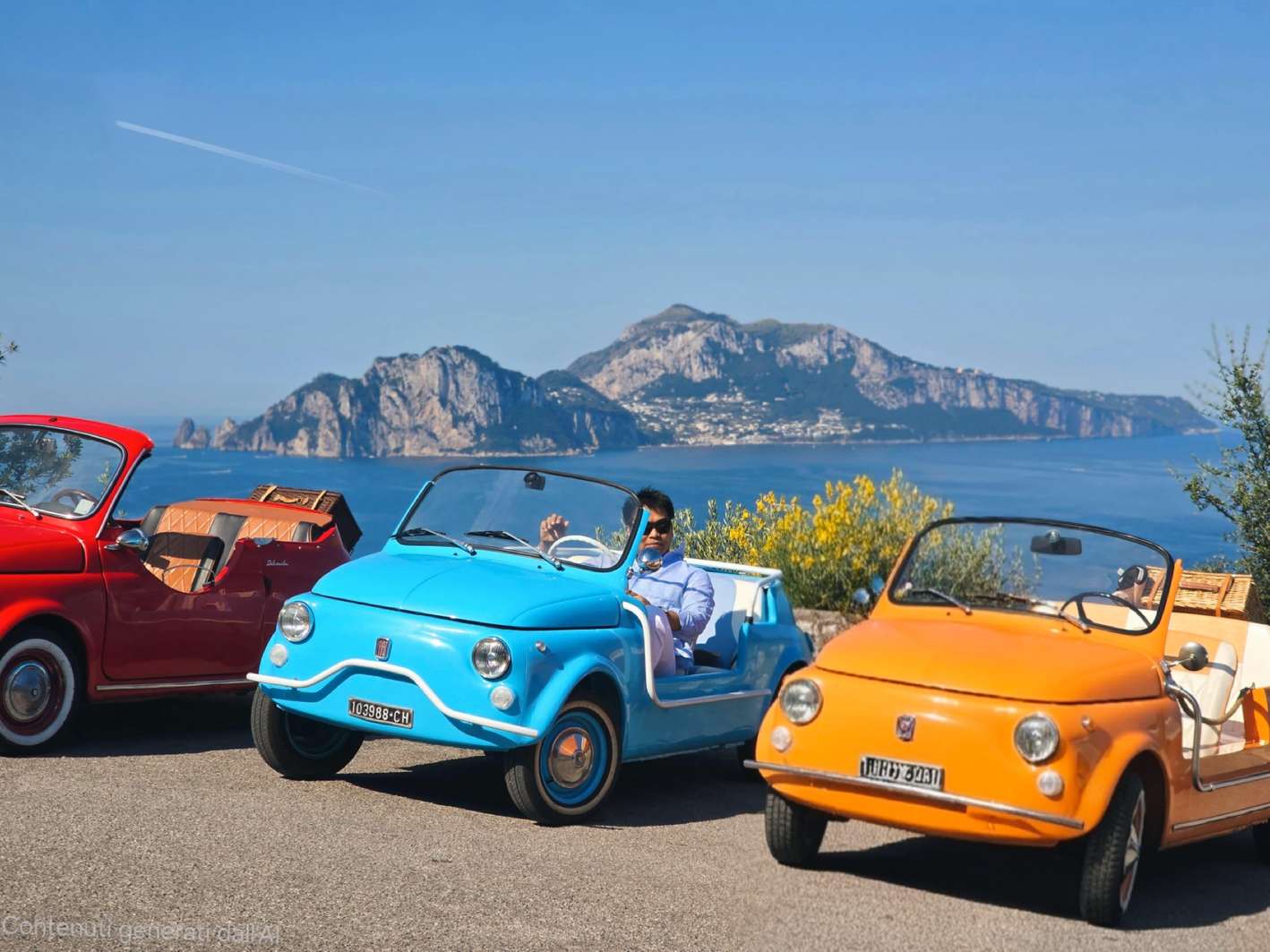
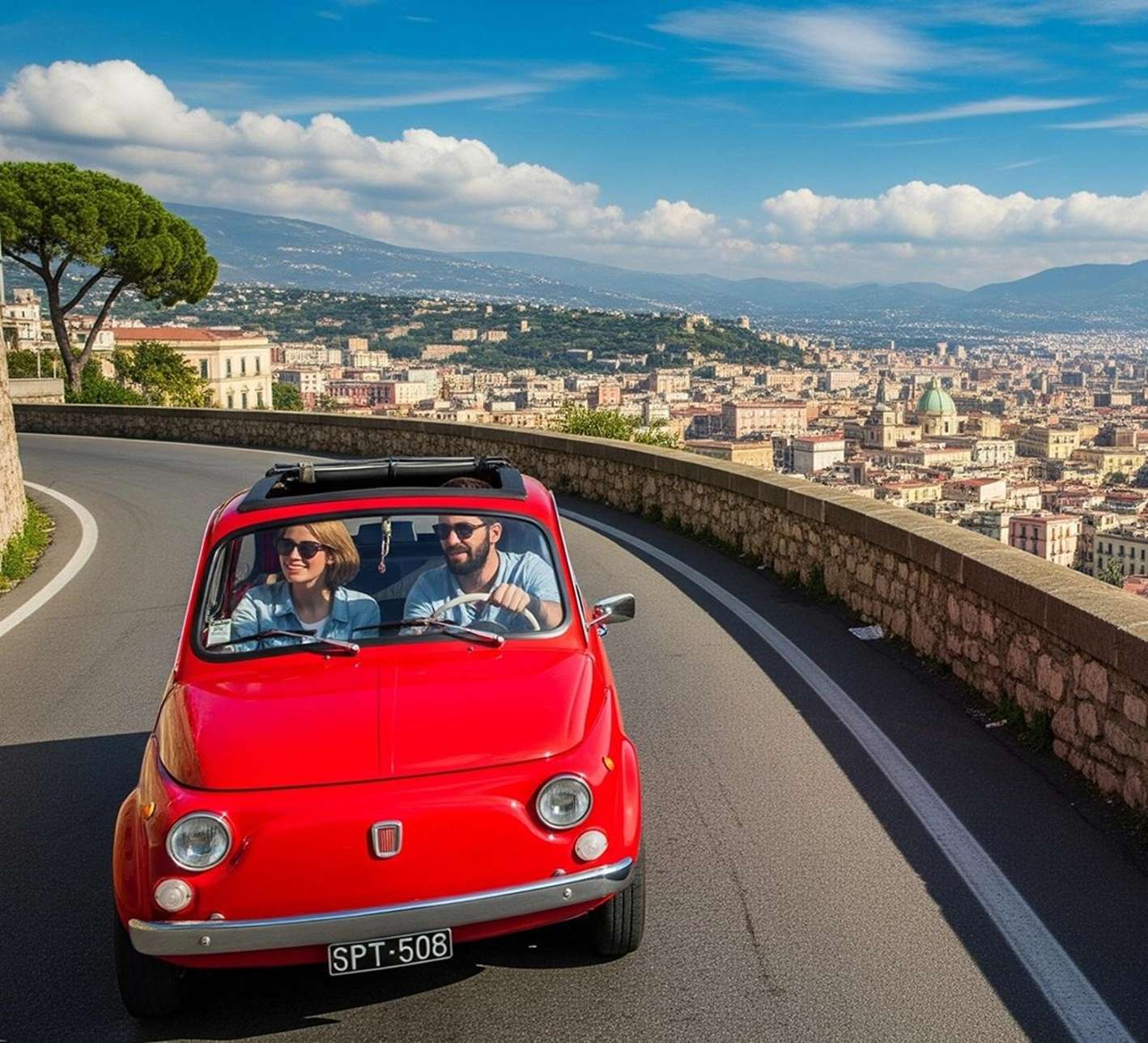
Take the wheel of a classic Cinquecento and live the Dolce Vita for real. Pick your route, from the cypress roads of Chianti to the coast, follow a guide in convoy, and book the self drive vintage Fiat 500 tour that fits your trip.
"Amazing day! The little cars were adorable and the views gorgeous. Lunch at a villa was delicious with a stunning backdrop. Gabriel and Helena were sweet, helpful and knowledgeable. Highly recommend!"
4.8★average rating592traveler reviews100%free cancellation29countries travelers came from
Choosing a self drive vintage Fiat 500 tour
A vintage Fiat 500 puts you behind the wheel of a 1960s classic, and the choice comes down to where you want to drive it. The Tuscan countryside routes wind past vineyards and hill towns, while the Syracuse and Corsica options follow coastal roads. Every experience here is self-drive, so comfort with a manual gearbox decides everything.
LicenceBring a valid driving licence; every driver presents one before setting off.
ManualAll these cars have a stick shift, and drivers who only know automatic cannot take the wheel.
AgeThe minimum age for drivers is 18 years.
Credit cardBring one, as some tours need it for insurance purposes.
BookingFor the Tuscan experiences, reserve about two months ahead in the busy season.
TrafficLeave a little buffer around your drive, because routes can shift when roads get busy.
WineIf your tour includes a tasting, keep it to one glass before you drive.
documentSelf-drive vintage Fiat 500 tours require a valid driving licence, and non-EU licence holders must also carry an International Driving Permit.
Check which of the two documents your chosen tour or rental asks for and bring both licence and permit on the day. Every self-drive option here also expects you to drive a manual car, so confirm you are comfortable with a stick shift before booking.
Compare self-drive vintage Fiat 500 tours
Most popular
5 hours·English
4.9(333)
Florence: Countryside Vintage Fiat 500 Driving Tour
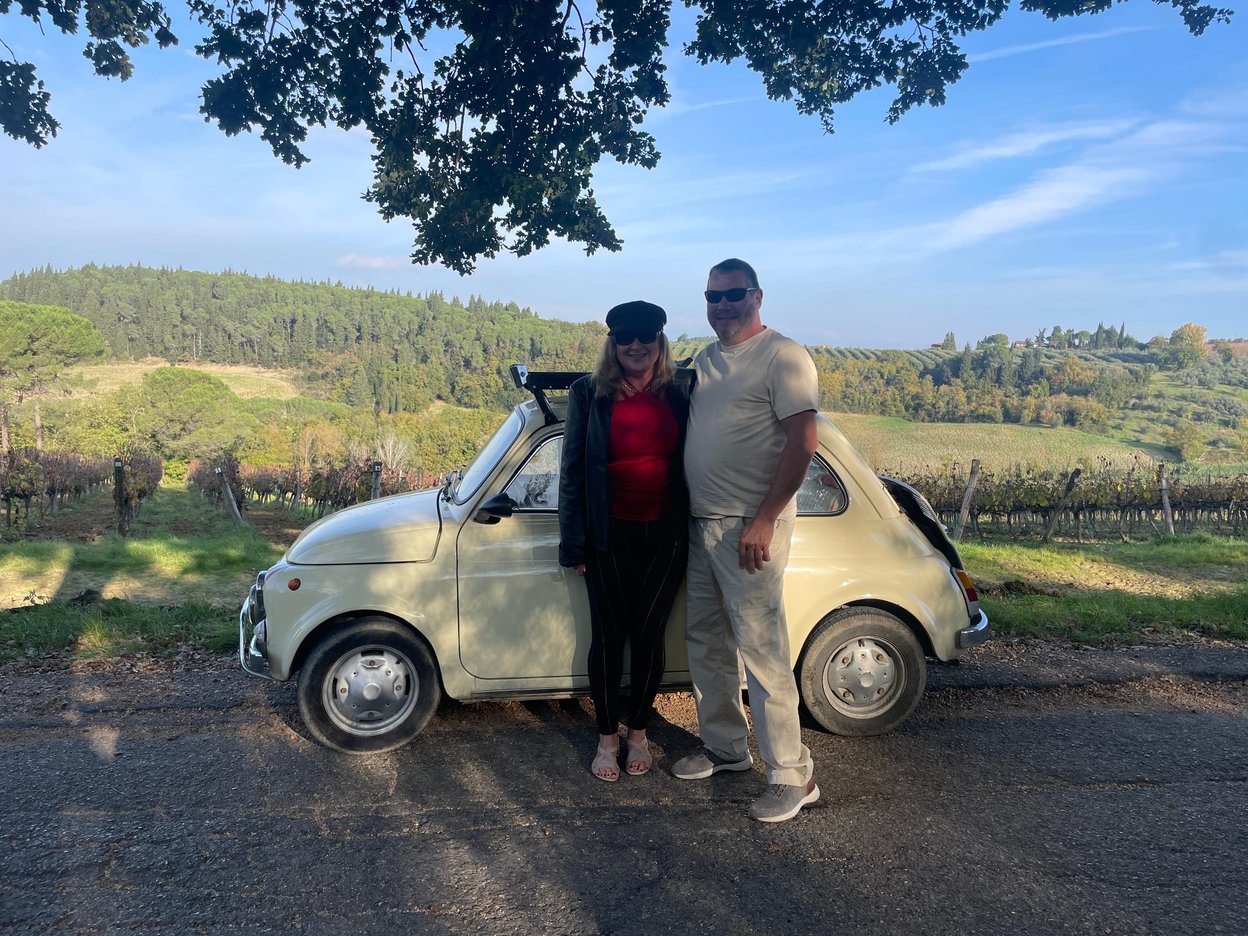
The best-reviewed Fiat 500 driving tour here, with 333 reviews and a five-hour route past Chianti vineyards, plus ham, cheese and Chianti.
Free cancellationRental of a restored Fiat 500Guide
What a self drive day in the vintage Fiat 500 includes
about 5 h
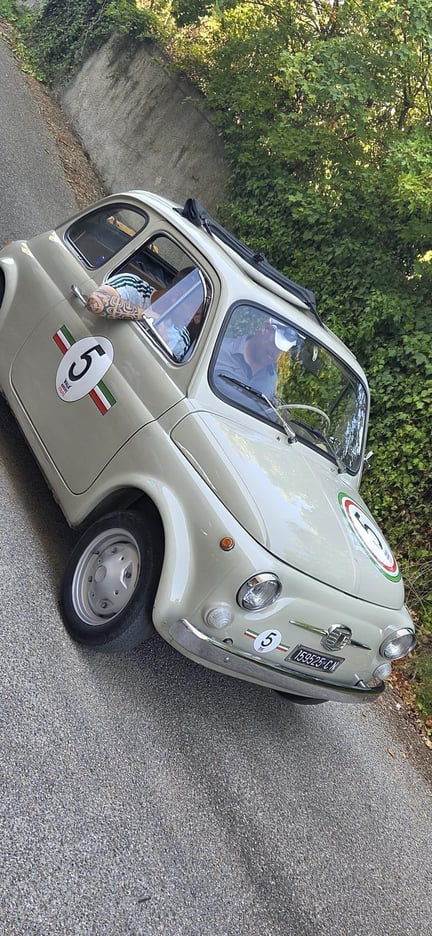
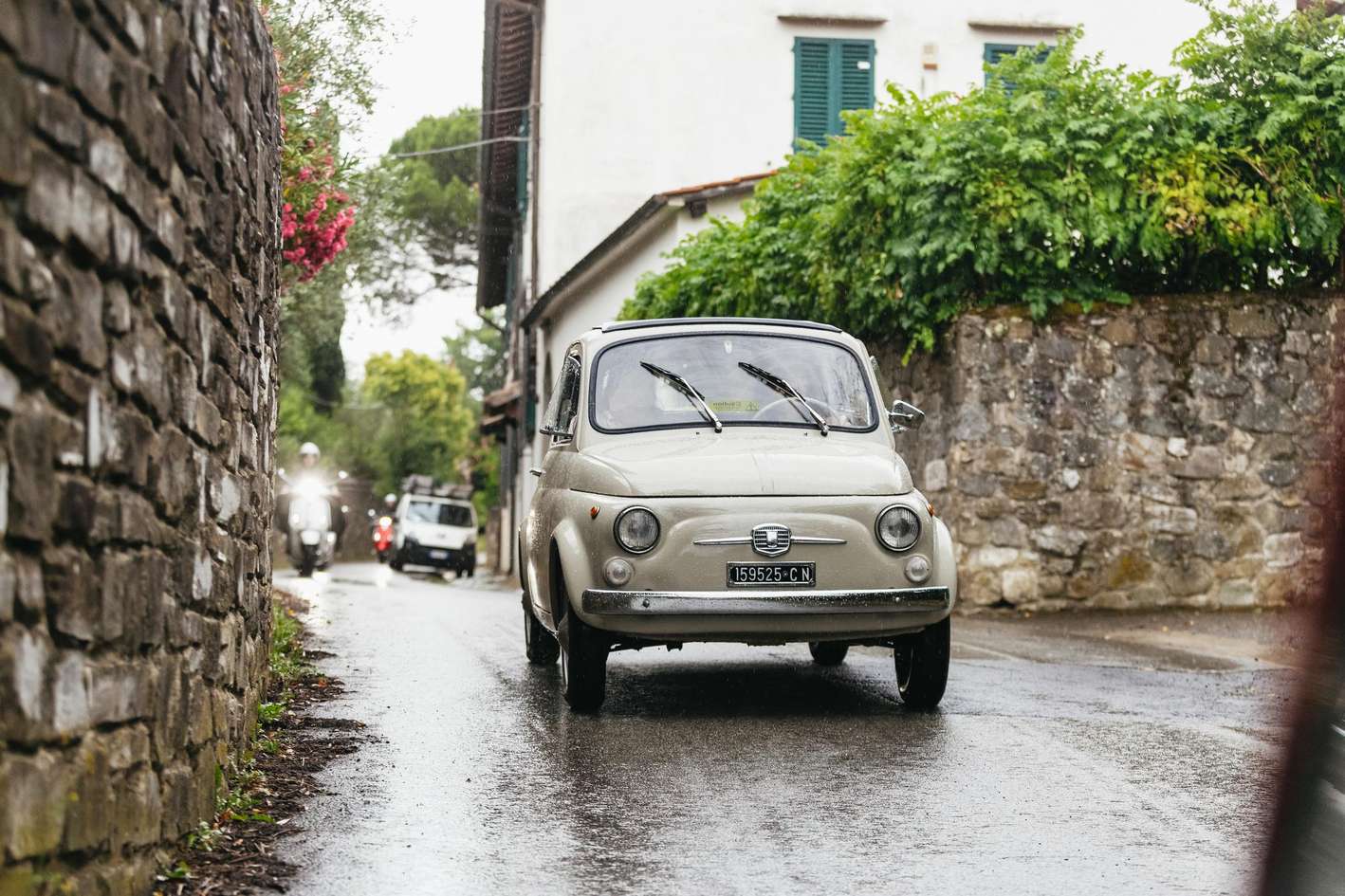
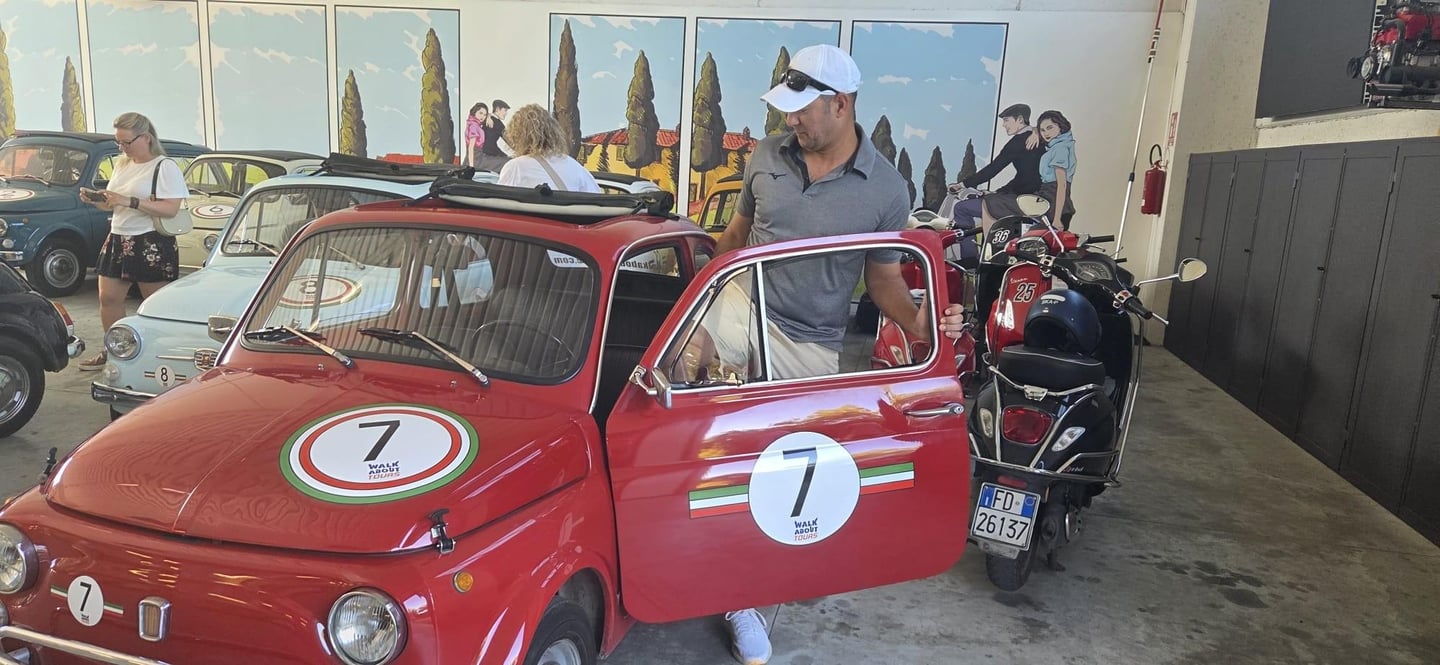
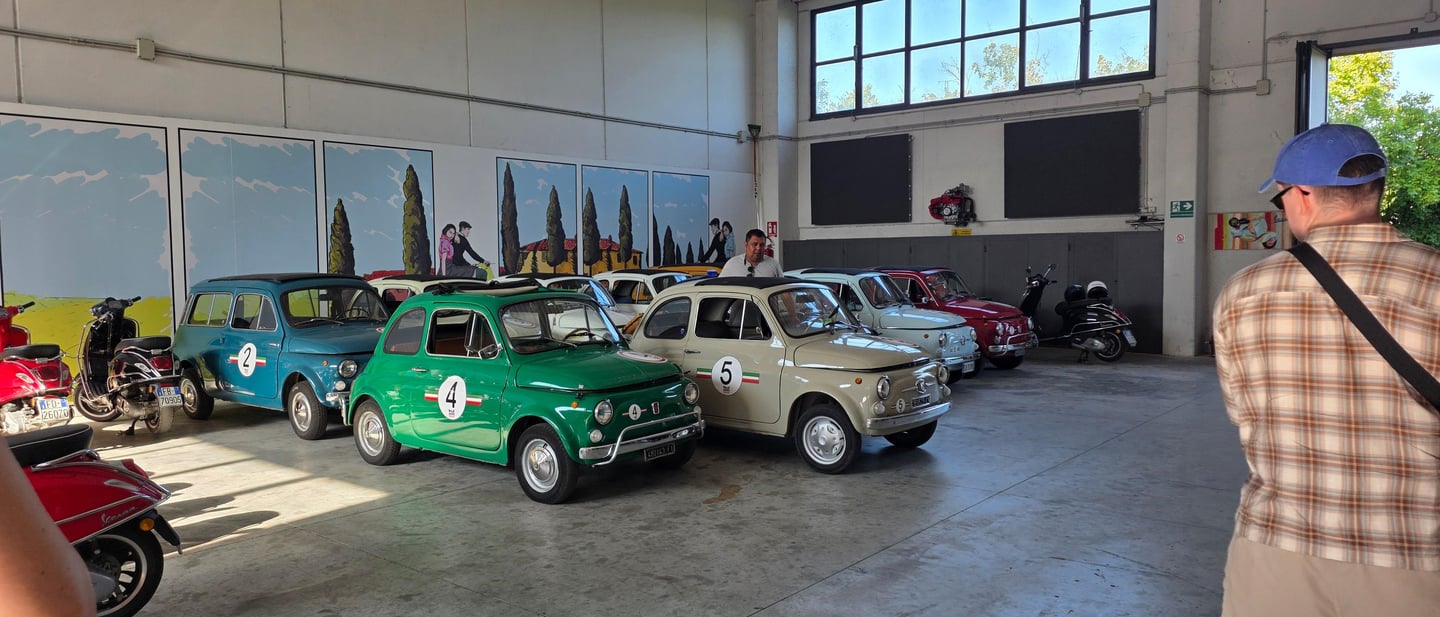
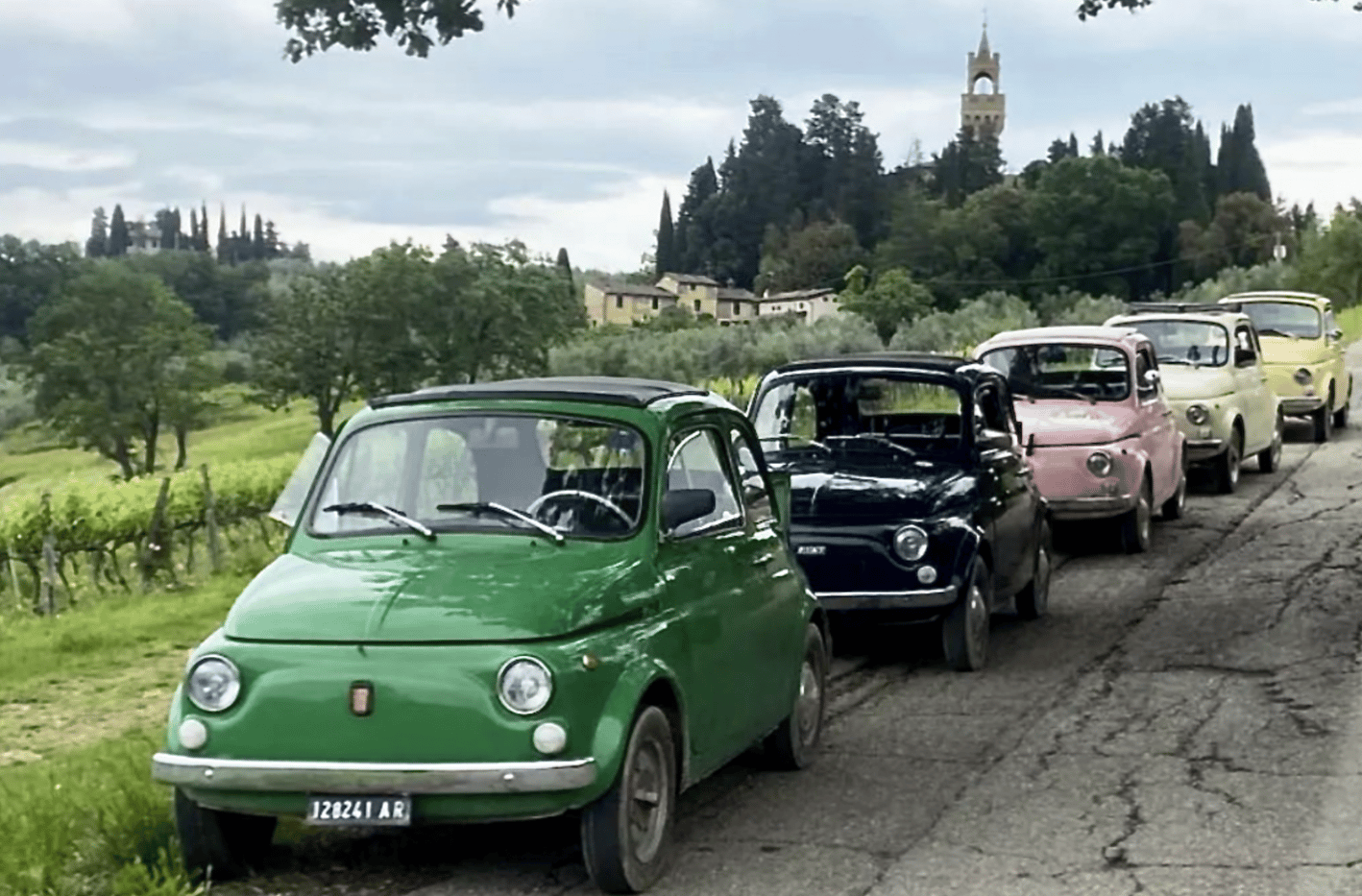
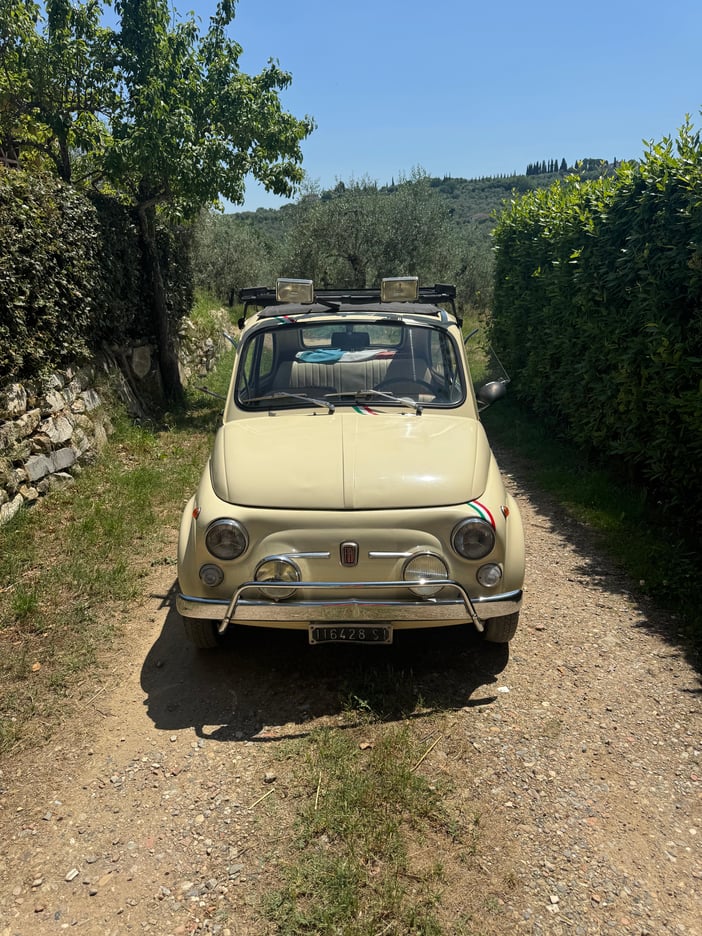
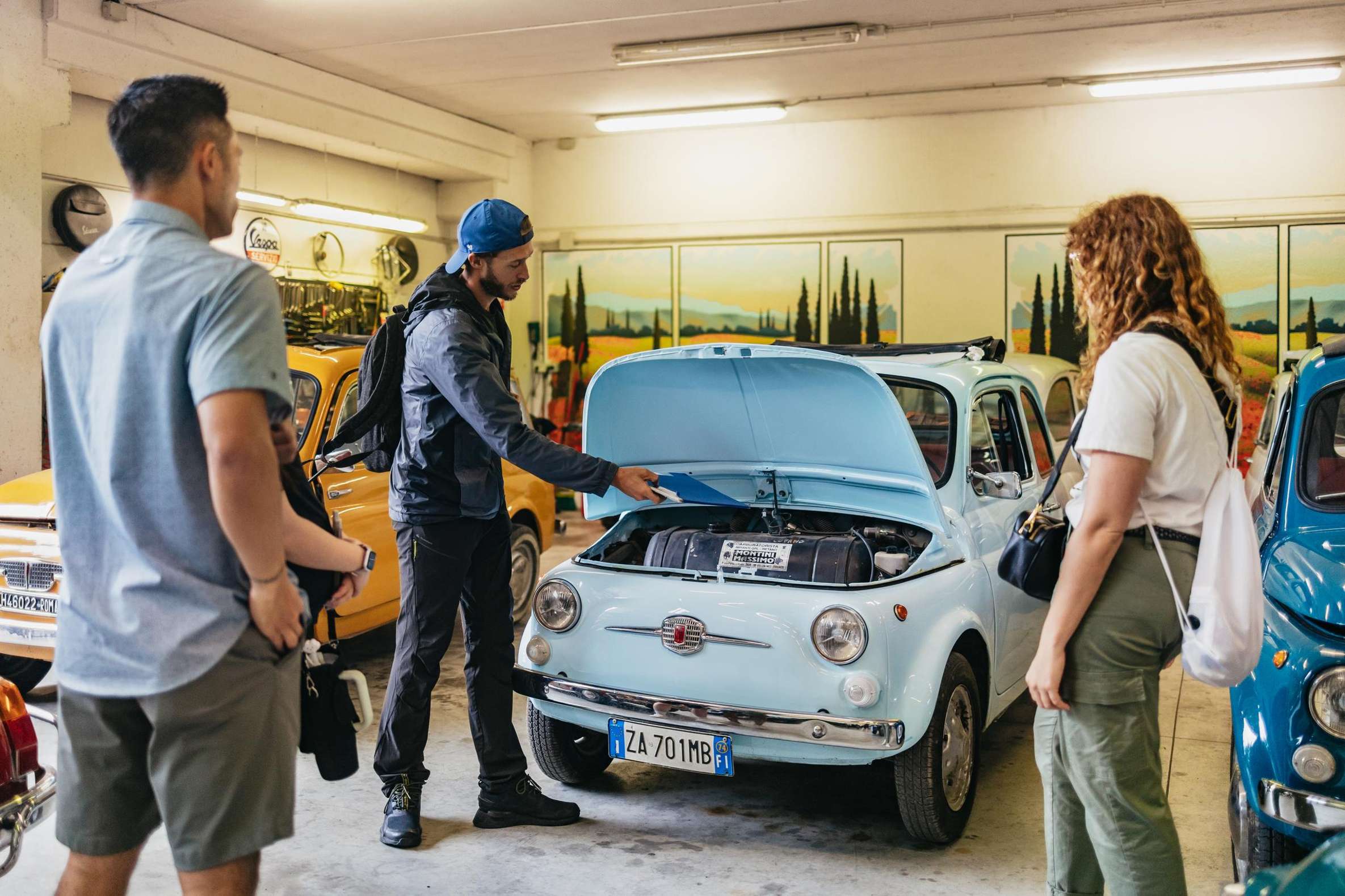
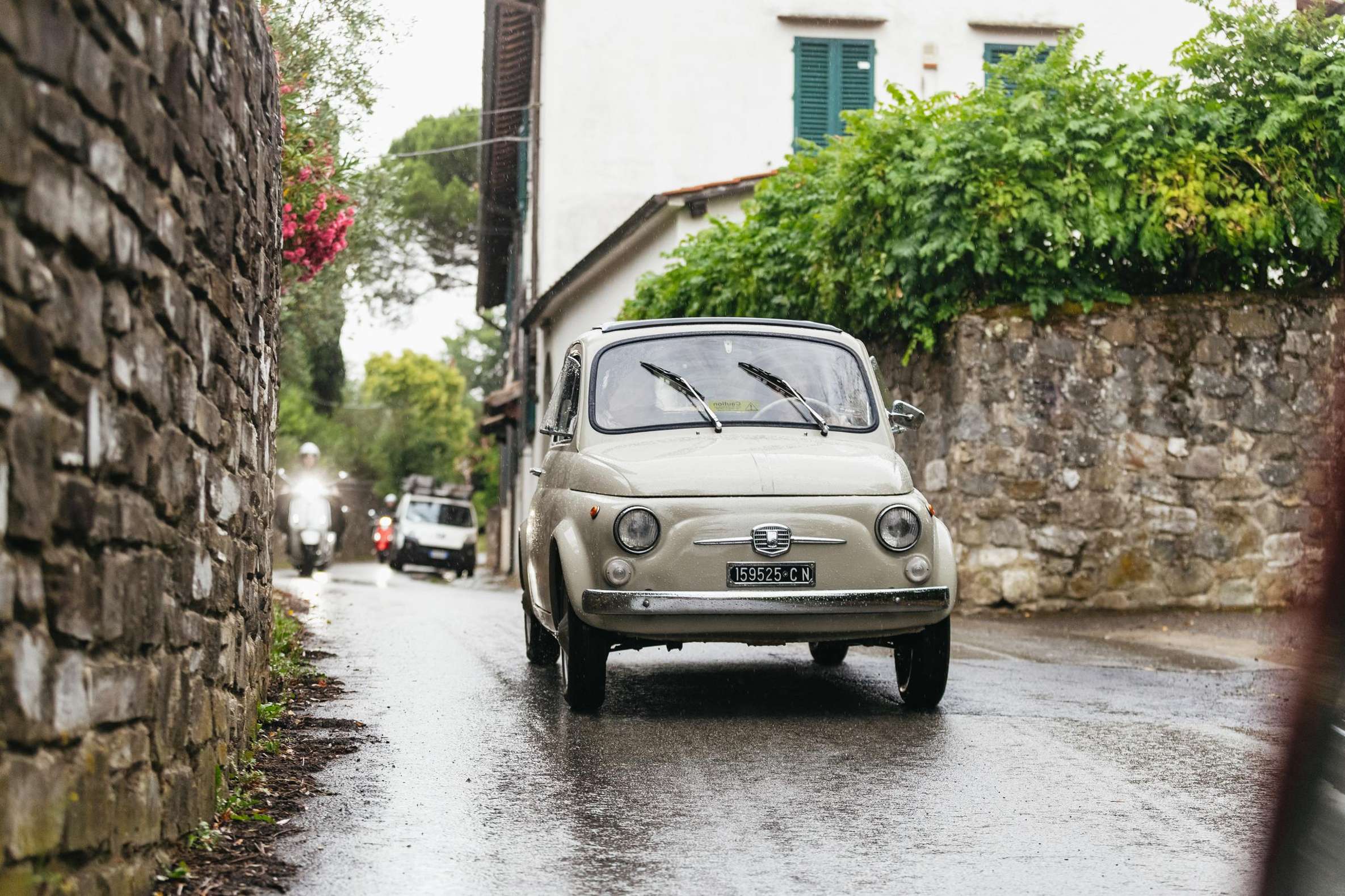
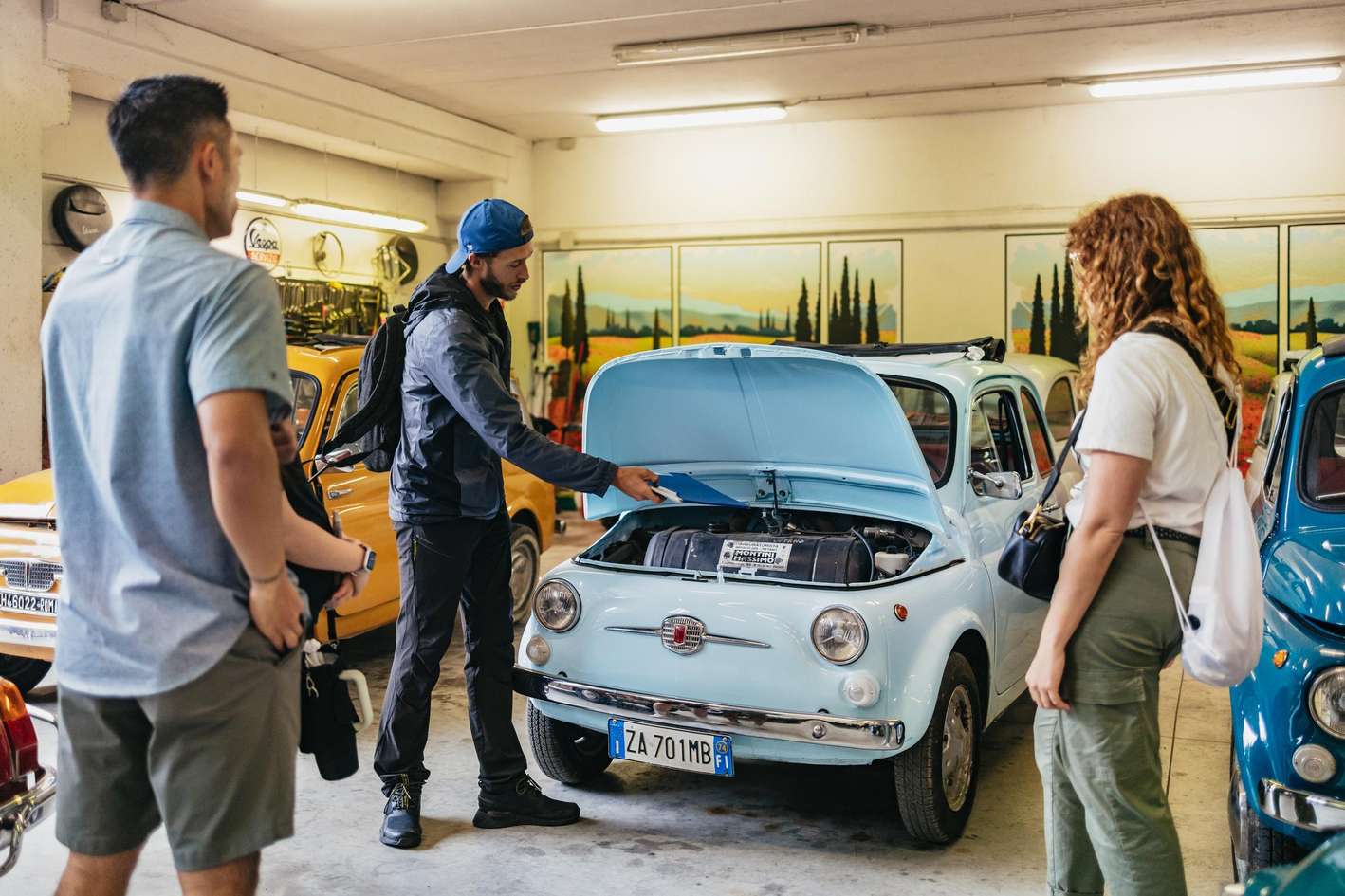
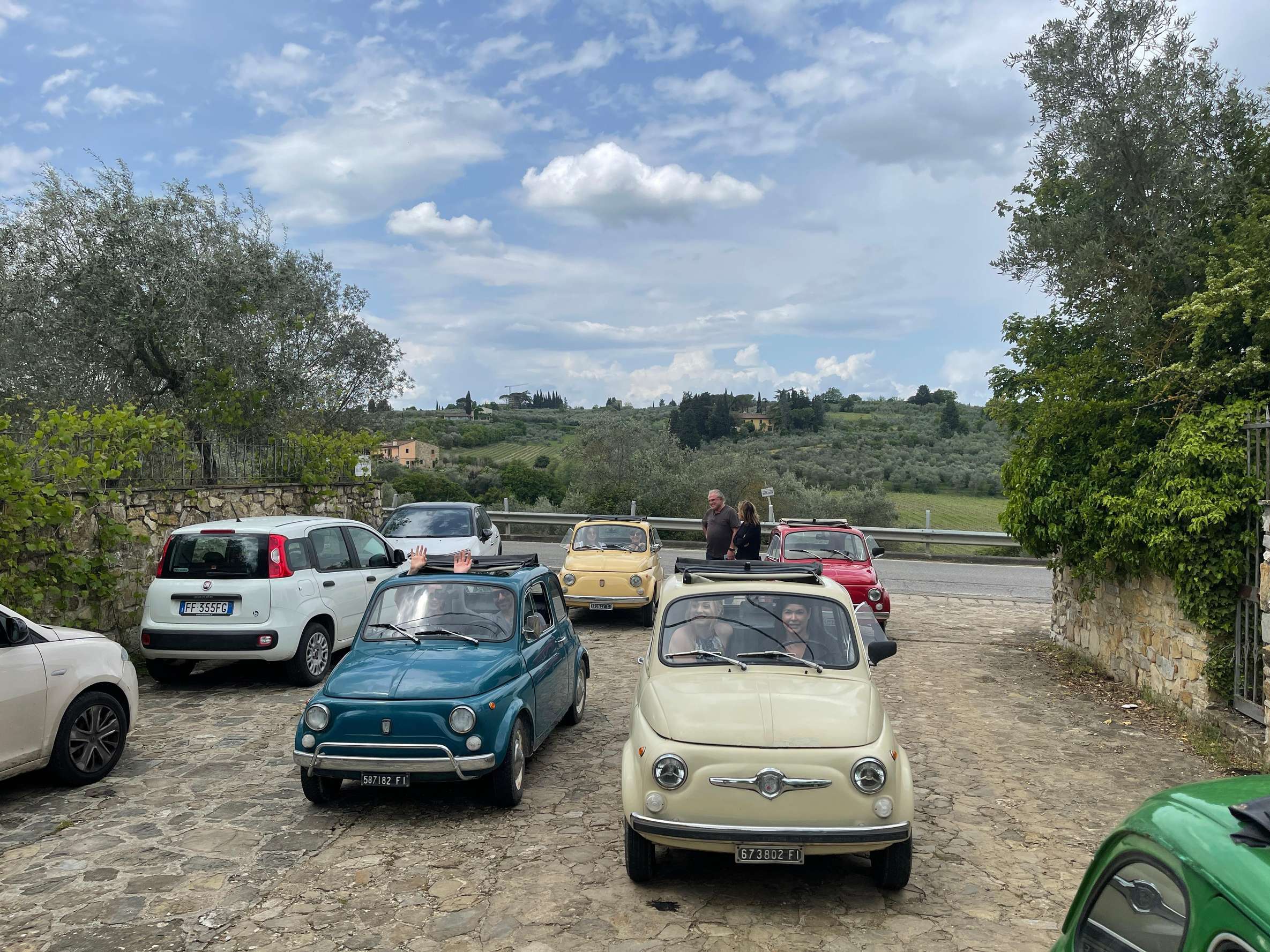
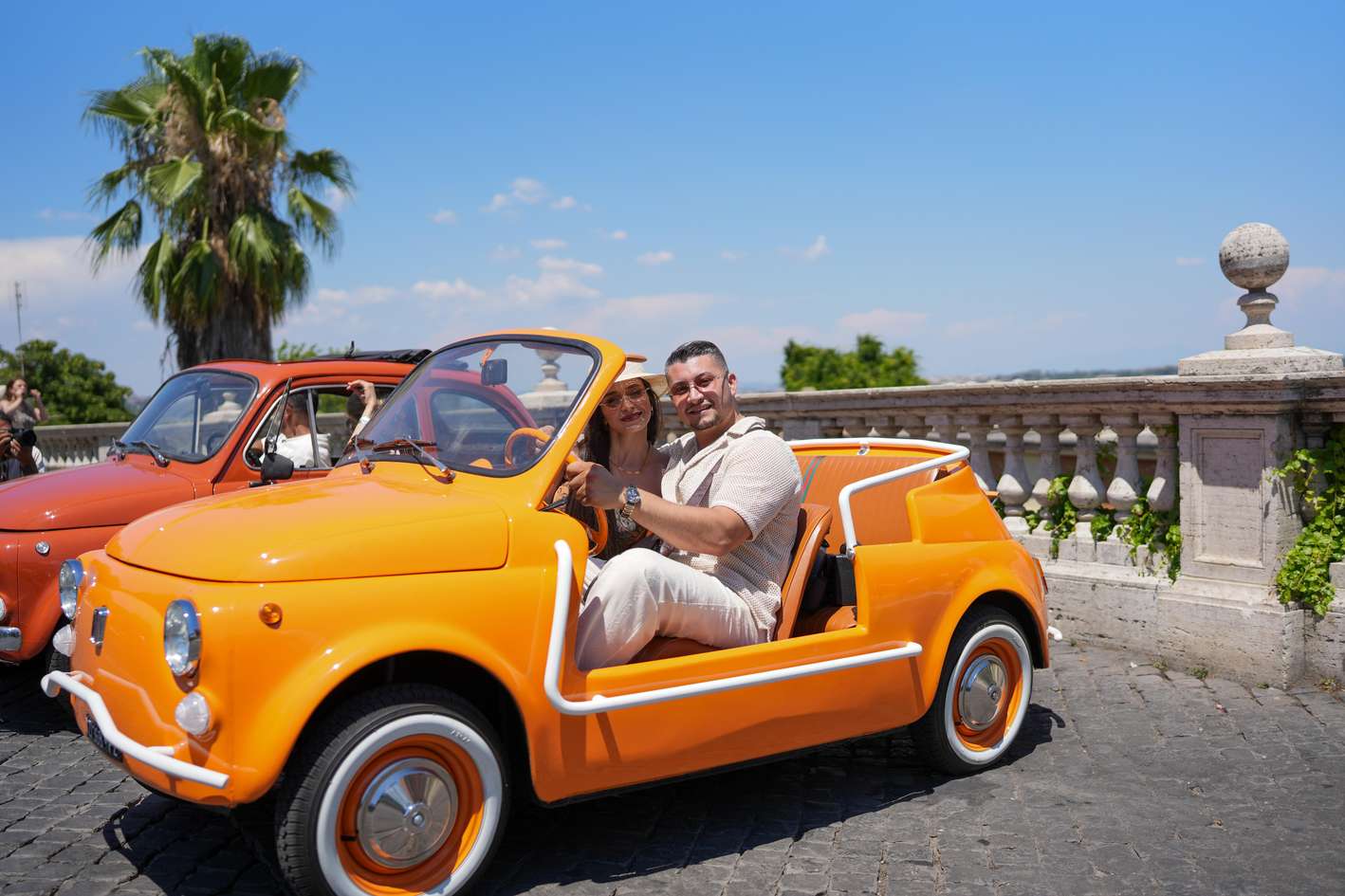
The five-hour drive out of Florence starts with the car itself: a restored Fiat 500 kept in a garage that was once the coach house of a palazzo.
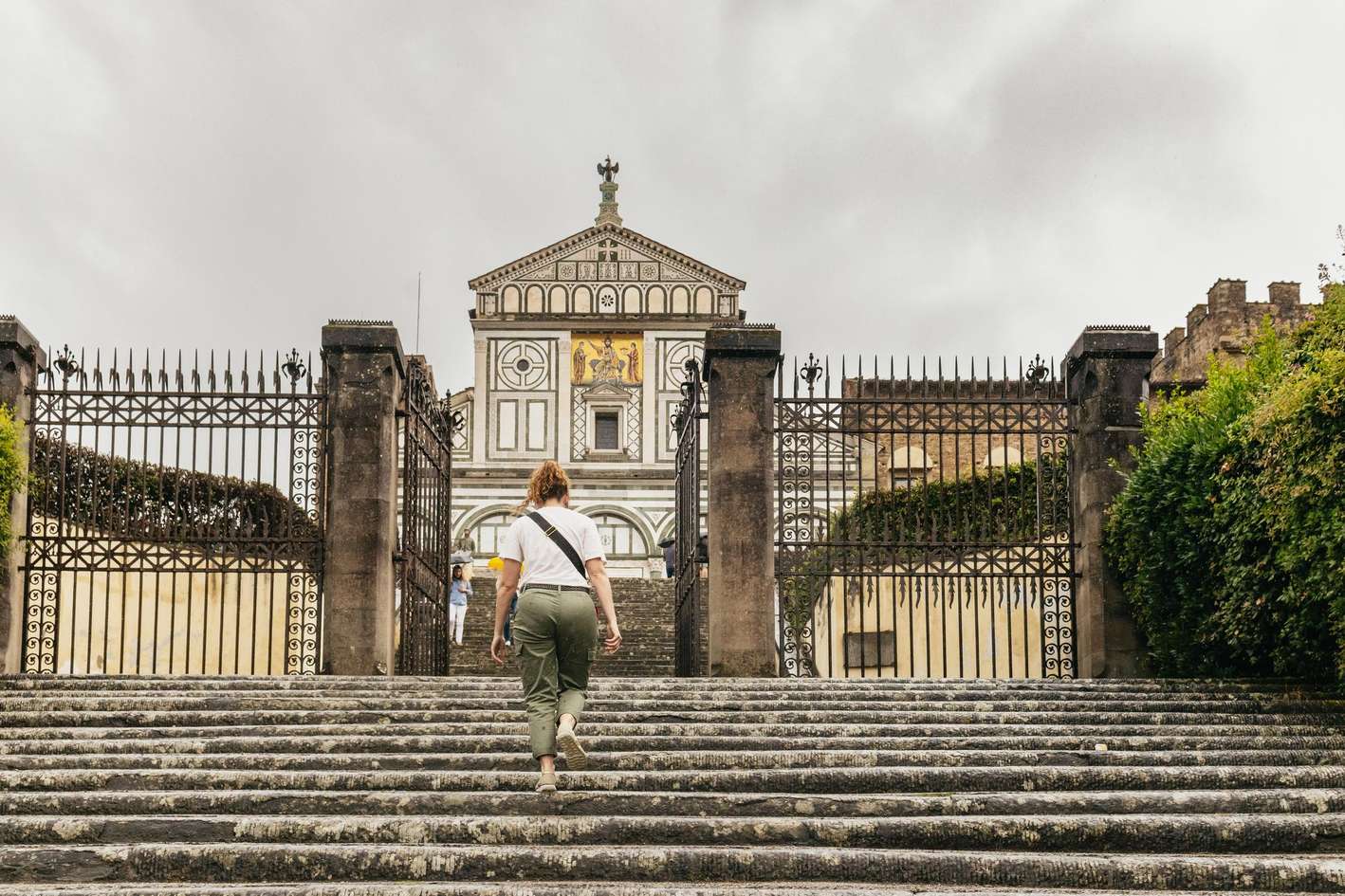
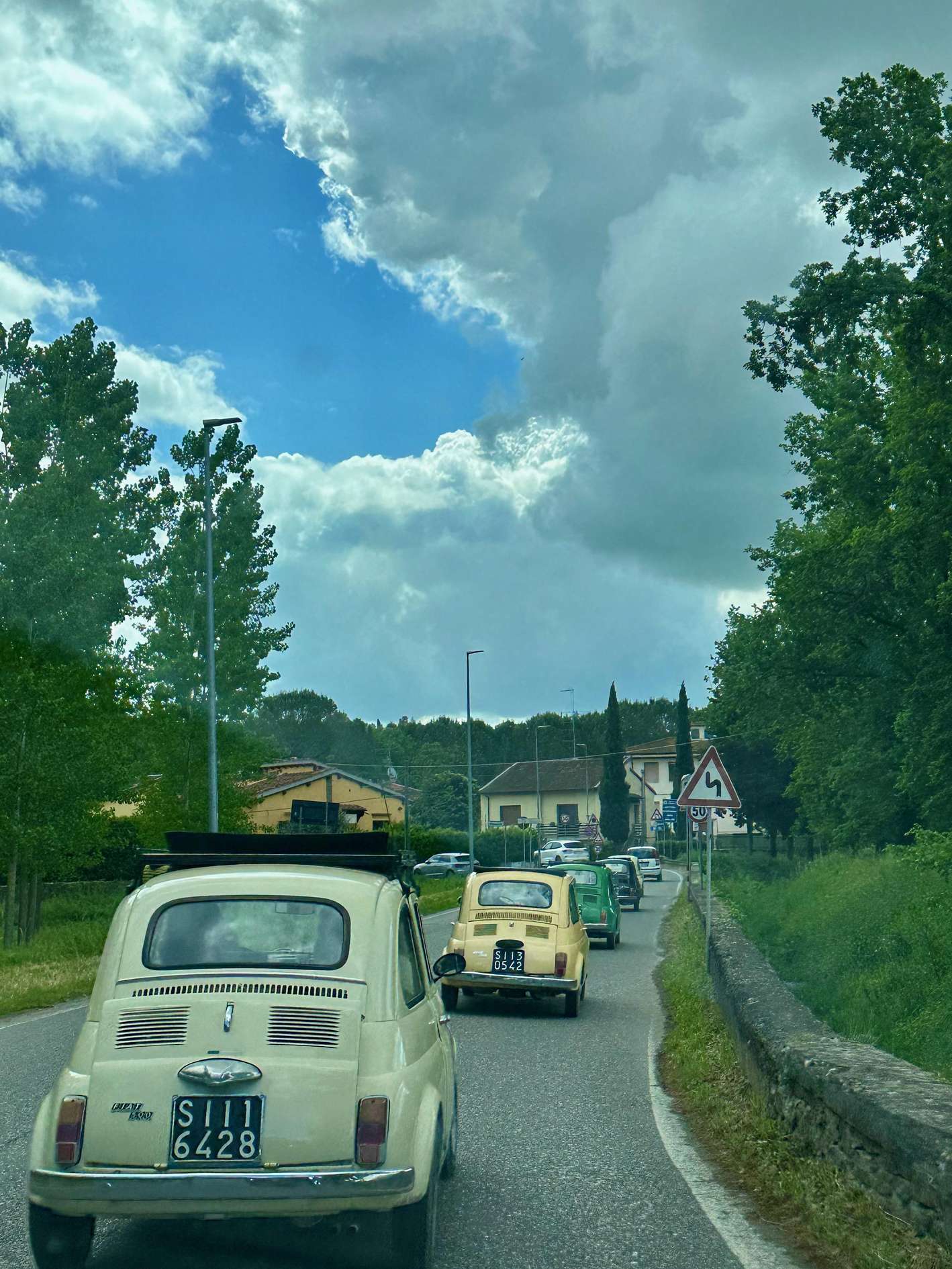
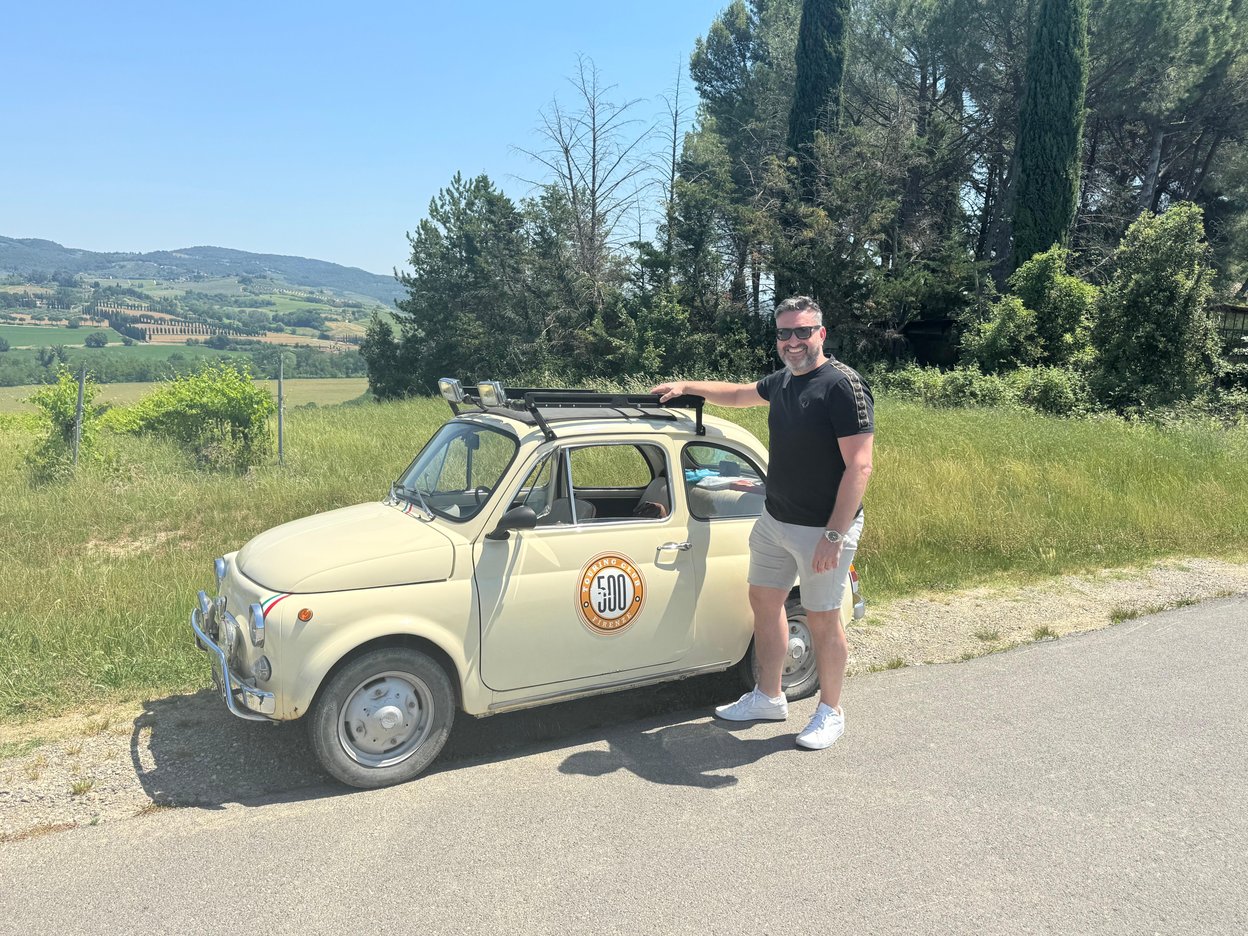
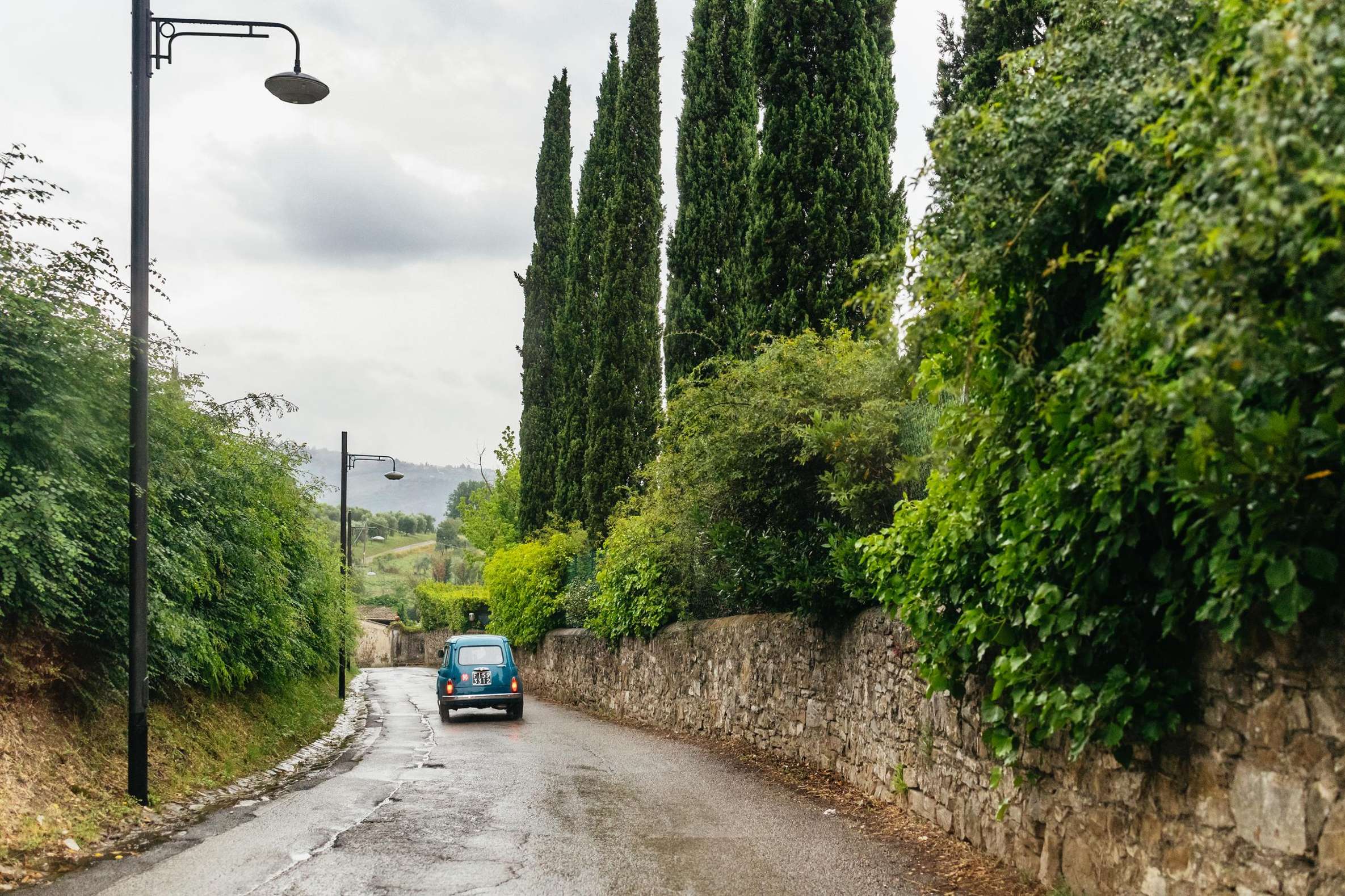
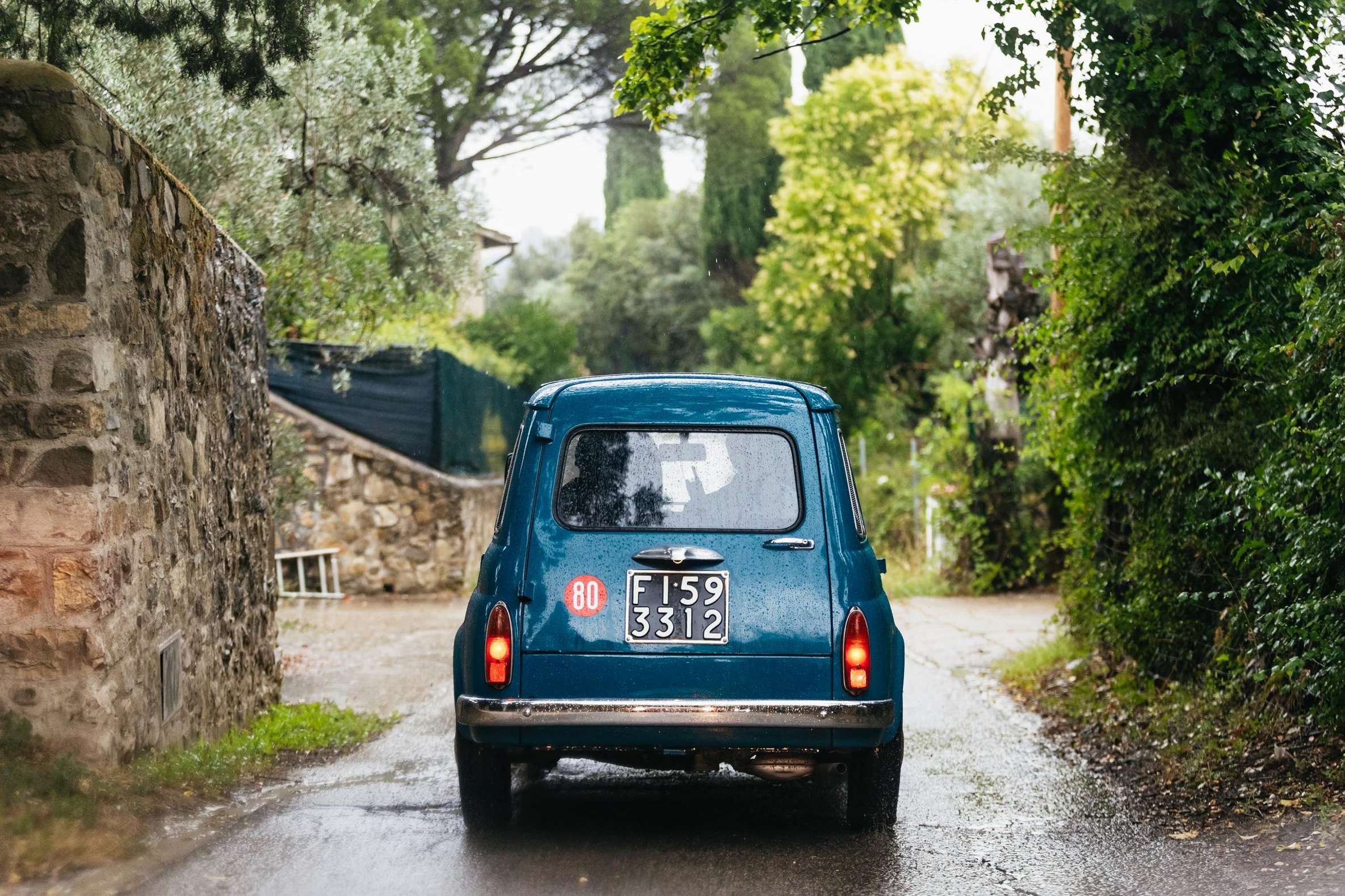
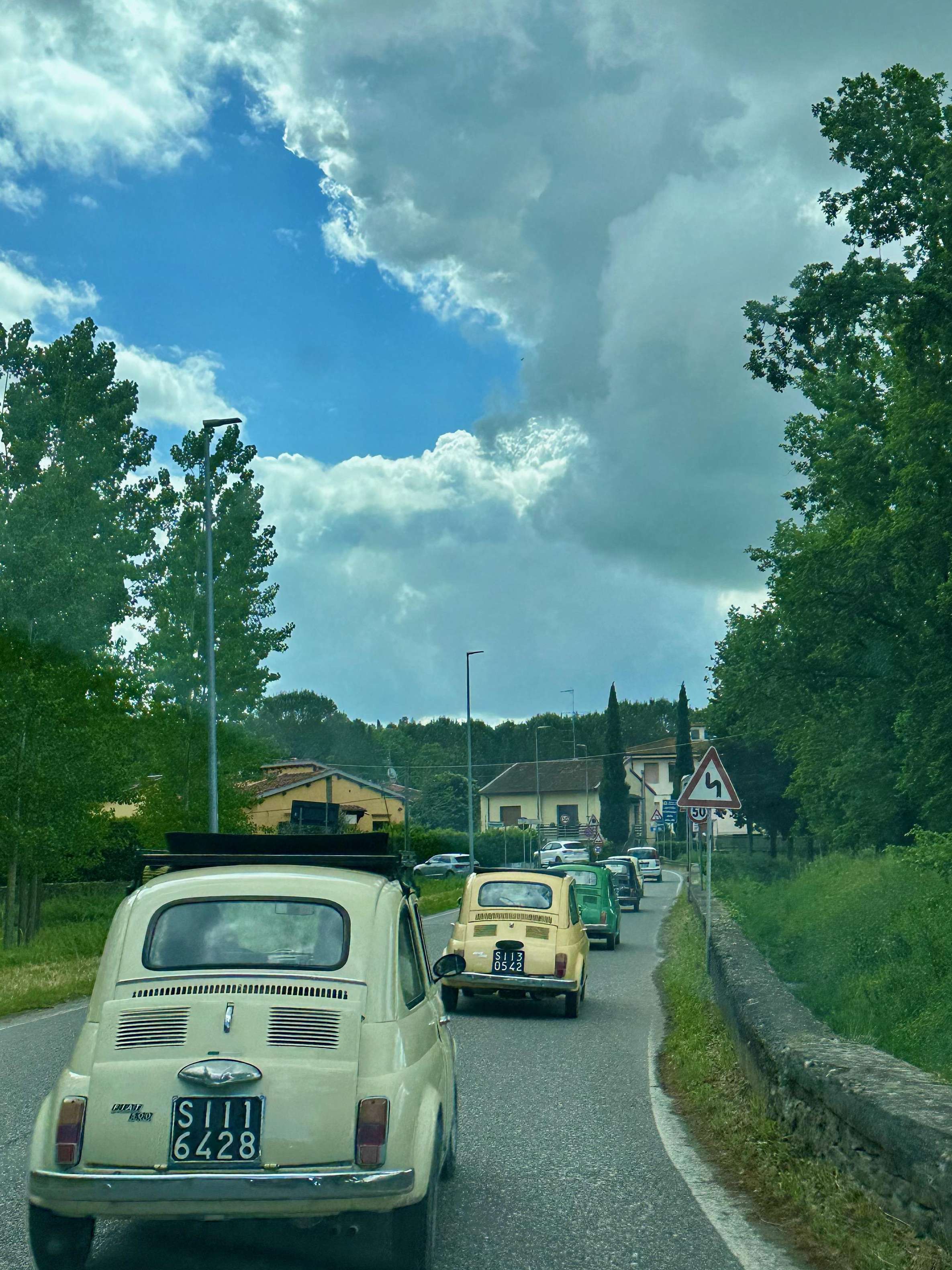
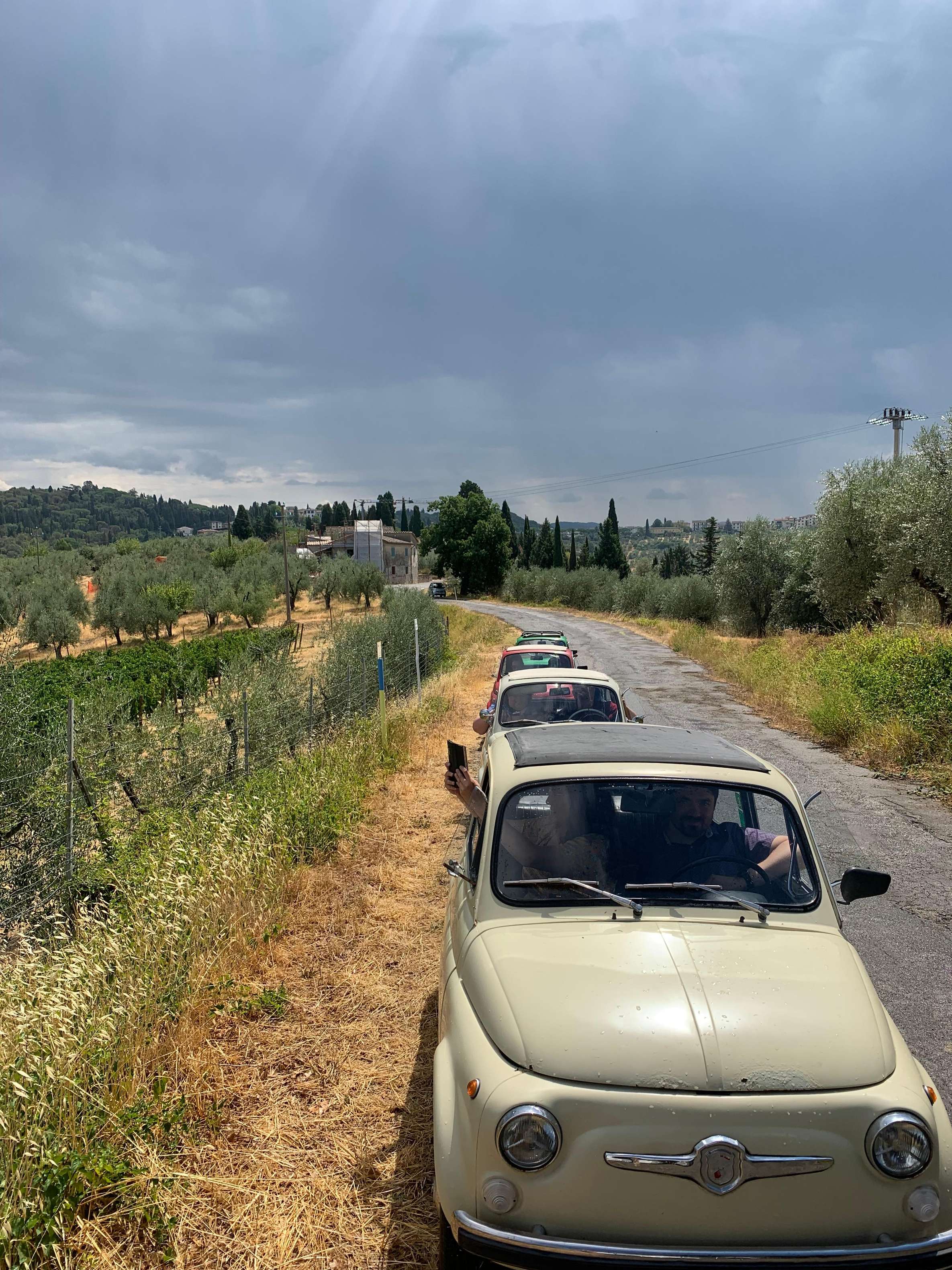
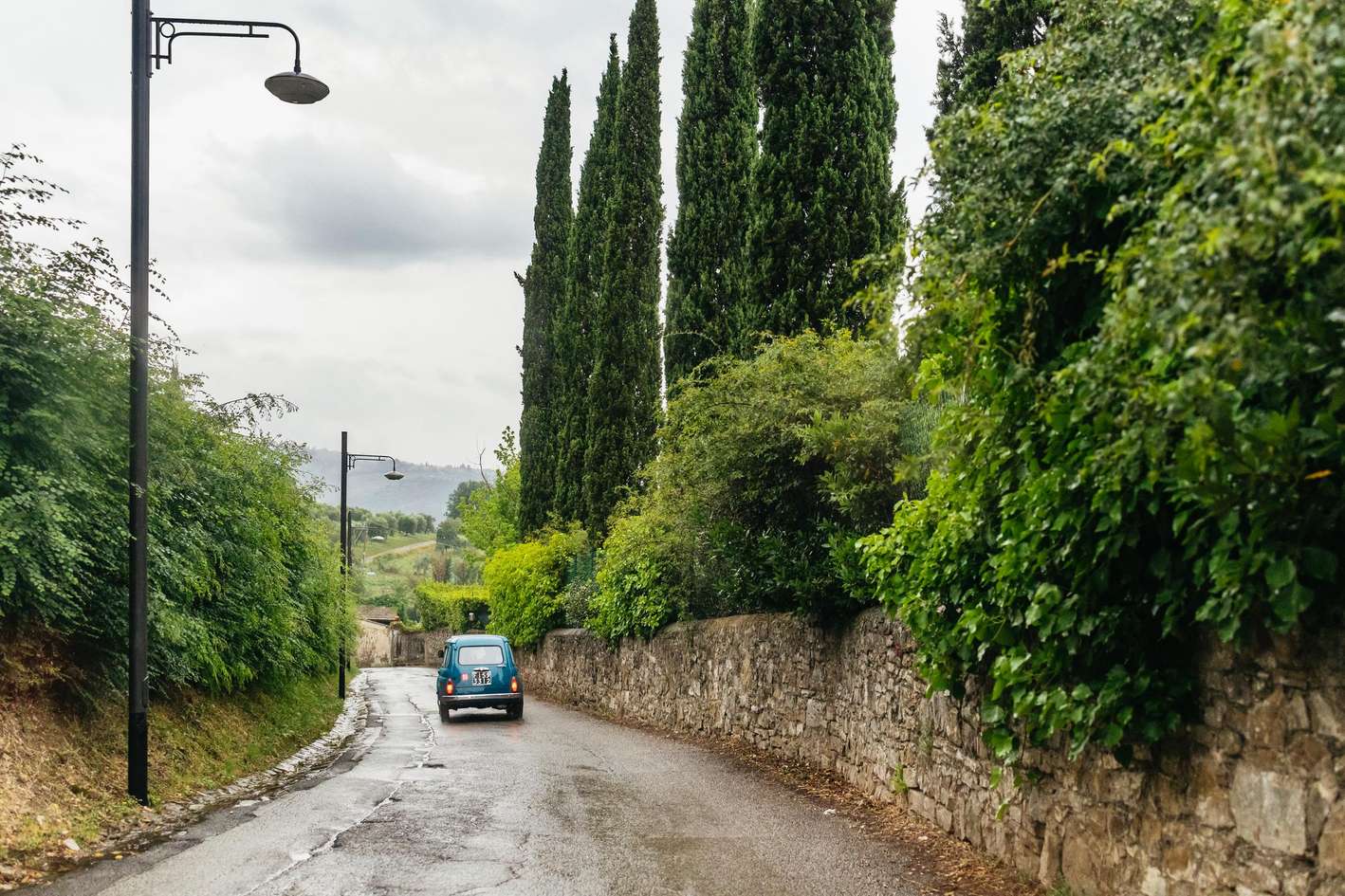
After a short introduction to driving a car from the 1960s, you follow your guide through the city and out along a cypress-lined avenue, with the hills opening up ahead.
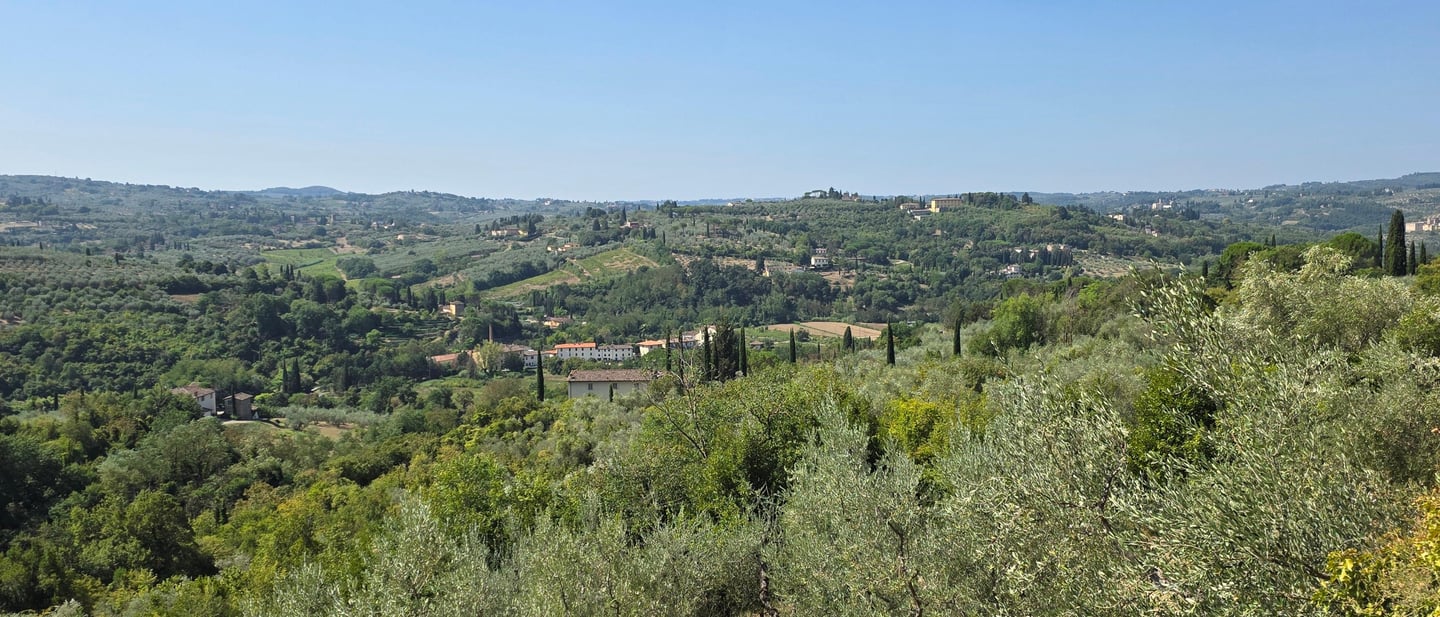
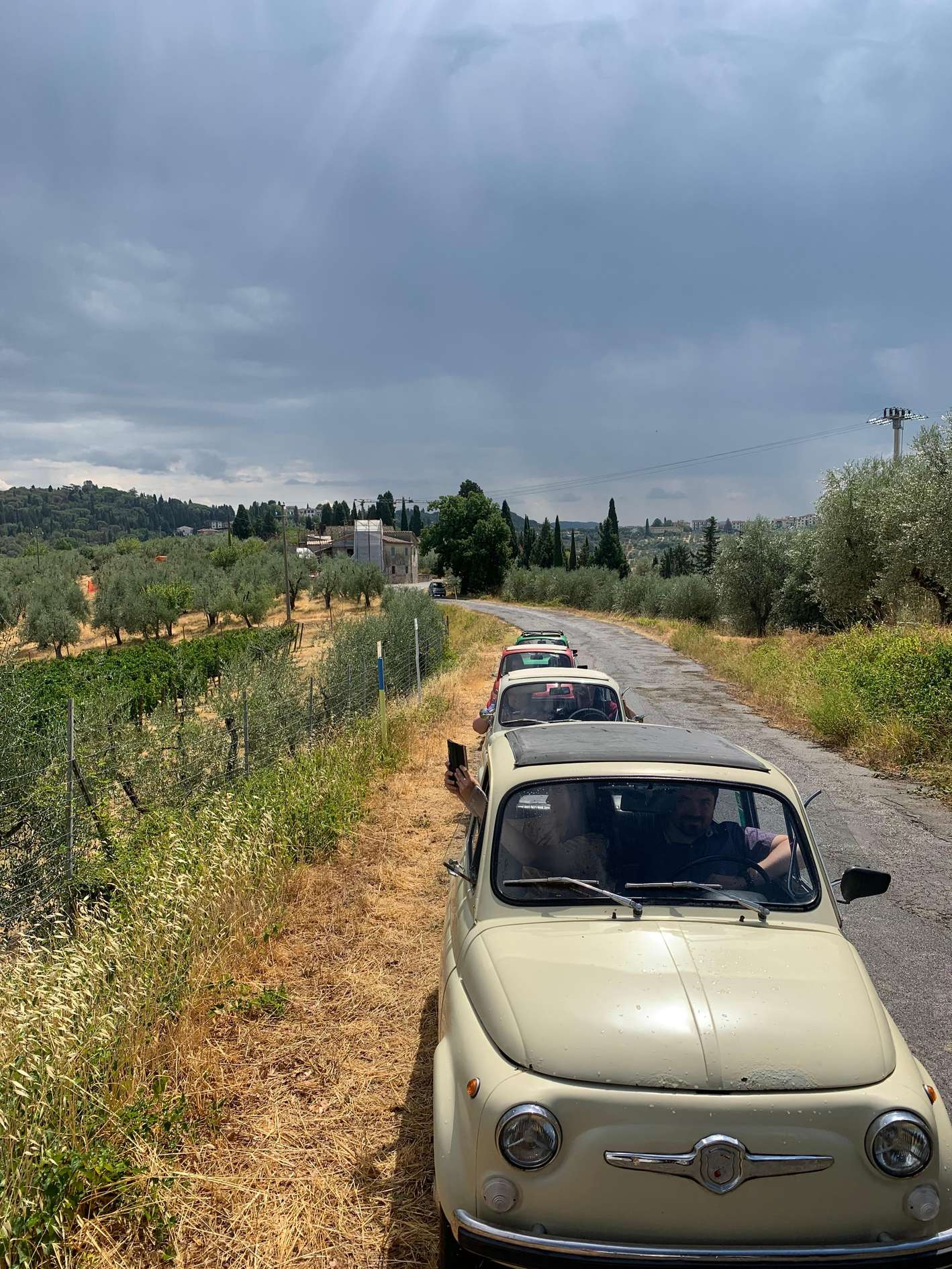
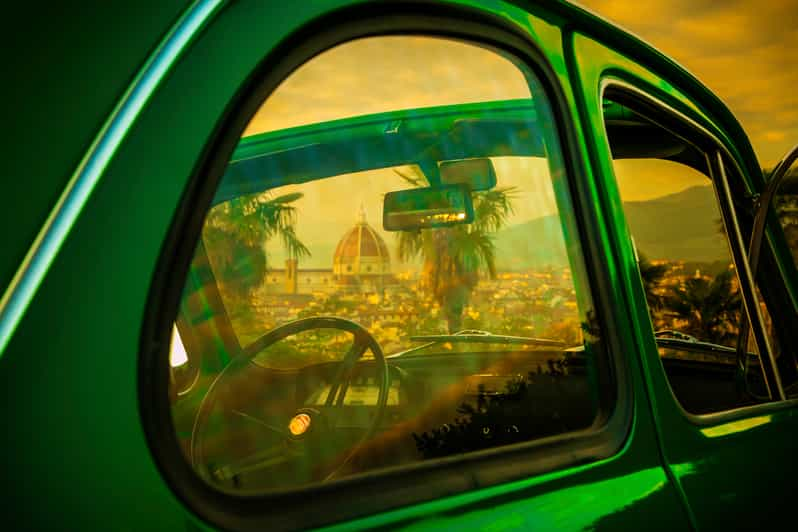
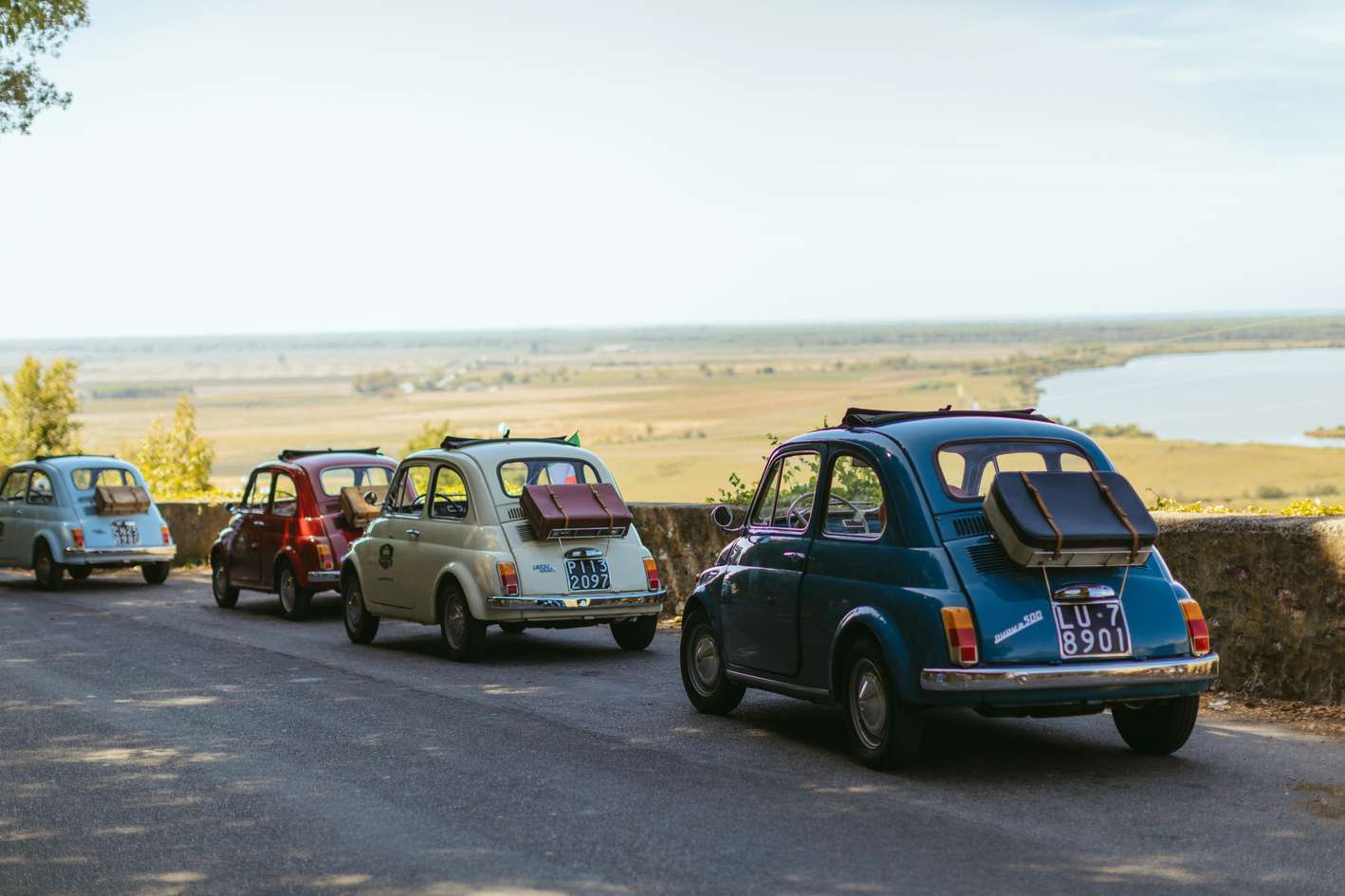
The route runs through quiet country lanes and hillside roads, with stops for photos of Florence and the surrounding countryside.
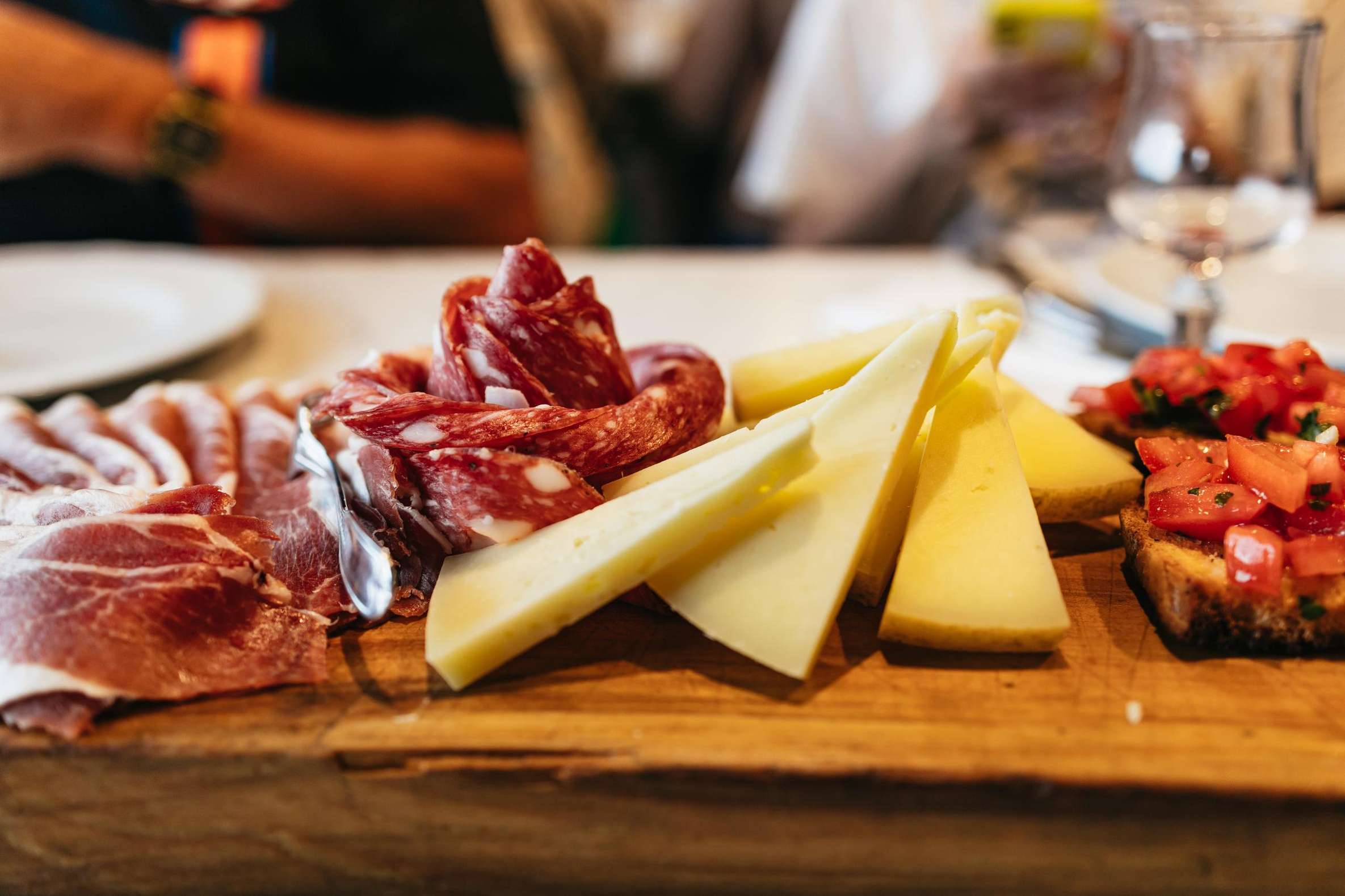
It ends on a private terrace overlooking the rolling Tuscan hills, where you taste local ham and cheese with a glass of Chianti. Fuel, insurance and the two-way radio that keeps you in touch with the guide are all included.
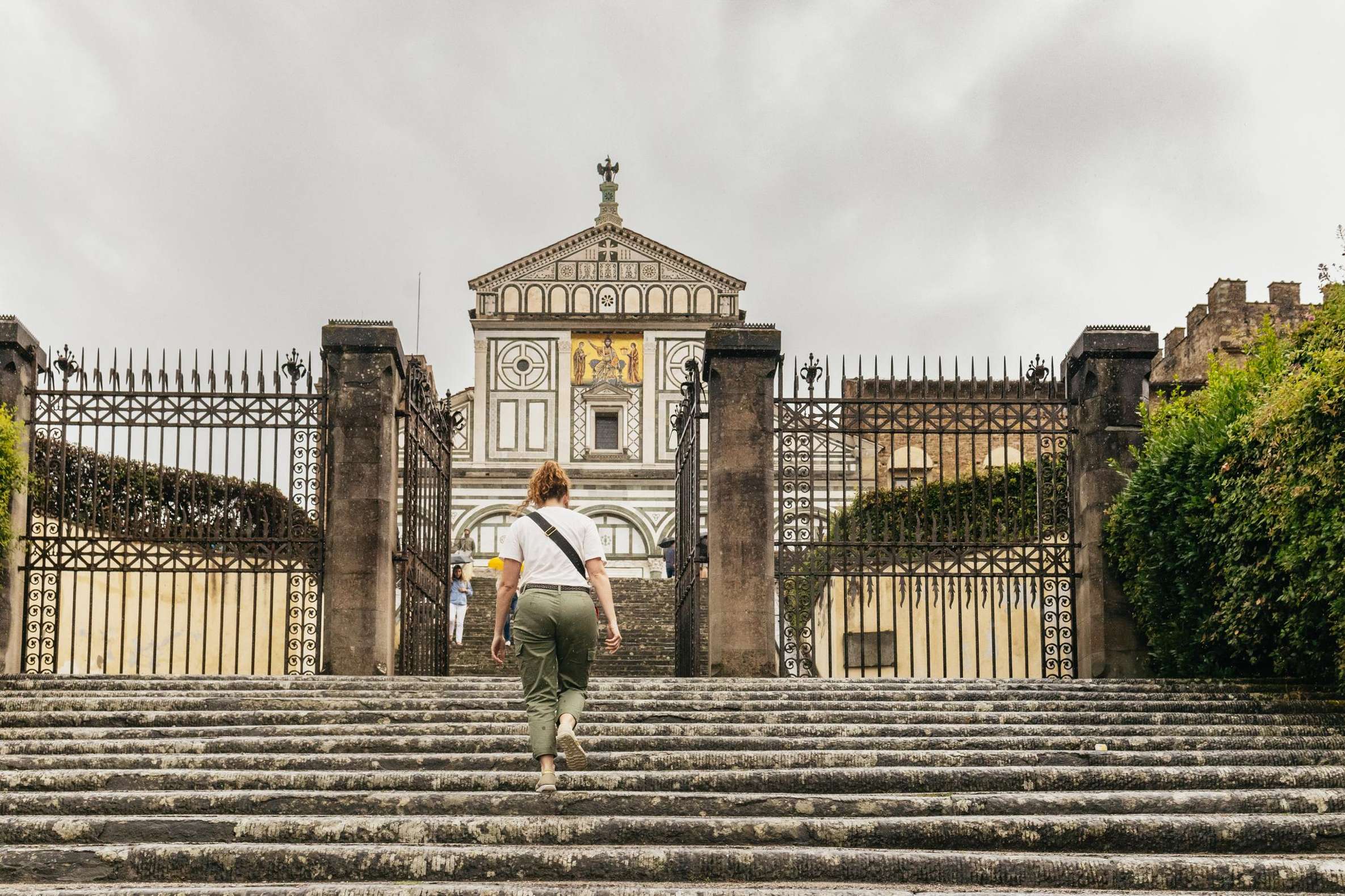
1Meet the car· about 45 minCollect your restored Fiat 500 at a garage that was once the stables of a Florentine palazzo, where the guide explains how to drive a car from the 1960s.2Out of the city· about 40 minDrive through the streets of Florence behind your guide, then leave the city by a cypress-lined avenue with wide views over the hills.3Church and photo stop· about 30 minStop at one of the oldest churches in Florence, step inside briefly, and take photos of you and the car with the city as a backdrop.4Country lanes· about 90 minFollow the guide in convoy through quiet country roads, passing villages and hill views, with the two-way radio keeping you in contact the whole way.5Terrace and tasting· about 60 minRelax on a private terrace with views of the rolling Tuscan hills, and taste Tuscan ham and cheese with a glass of Chianti. A vegetarian option is available.6Back in Florence· about 35 minDrive back to the garage with your photos and your tasting memories, and hand the keys over before the tour ends.
Where the other tours go
Chianti Hills
From Florence: Self-Drive Fiat 500 Tour in Chianti
Rental of a restored Fiat 500GuideTwo-way radio to stay in contact with the guideTuscan ham and cheese tastingThird-party insurance, driver insuranceFuel
Not included
Hotel pickup and drop-off
Every self drive vintage option, at a glance
Green marks the lowest price. Each price says whether it is per person or per group.
Tour
Price
Duration
Pickup
Languages
Best for
Our pick
Florence: Countryside Vintage Fiat 500 Driving Tour
4.9★ (333)
from $116lowest price
5 hours
no
English
drivers who want a full Tuscan day with ham, cheese and Chianti stops
Pro tipBook 24 hours or more ahead of your ride and every featured tour here allows a full refund if plans change.
Common mistakeFirst-timers wait until arrival week and find the cars already taken for their dates.
02
Choose the right option
Read what each option includes before you pay. Around Florence you can pick a five-hour countryside drive with ham and cheese, a two-hour Chianti run, or a wine-and-lunch day.
Common mistakeComparing durations alone. The five-hour tour bundles fuel and tasting, while the shorter one excludes a fuel surcharge.
Pro tipOn the wine-and-lunch tour the nominated driver must be a regular manual driver, so pick your driver before you book.
03
Check your documents
Have your valid driving licence ready and, if you are a non-EU driver, an International Driving Permit. Bring a credit card for insurance on the Chianti tour.
ImportantEvery self-drive option here requires you to drive a manual car. An automatic-only driver cannot take the wheel, and there is no exception.
Pro tipUK photocard licence holders do not need the permit in Italy, so check which country issued yours before buying one.
04
Read the small print on payment
Before paying, note what the tour covers. Some include fuel and insurance; others add a fuel surcharge or expect you to budget for trip fuel and any tolls afterwards.
Pro tipA fuel surcharge of fifteen euro per car is collected at the time of the wine-and-lunch tour, so no surprise at the meeting point.
ImportantFree cancellation usually means at least 24 hours before the start. Cancel later and the refund is gone.
05
Plan the day itself
Arrive with time to spare for the briefing on the vintage gearbox and to meet the guide. Follow the guide's car in convoy on quiet secondary roads and leave a little buffer for delays.
RecommendedTake the briefing seriously. The old gearbox needs earlier downshifts and slower changes than a modern car.
Common mistakeAssuming a driving lesson. The guide briefs you and leads the way, but the tours are not training sessions for new manual drivers.
What to know before you book a self drive vintage Fiat 500 day
Can stop the dayGood to knowGood news
01
ChoosingWhat it is, who it suits, when to go
6
The drive
On every tour on this page you take the wheel yourself, following a guide's lead car or radio contact. Routes differ: Tuscan countryside with a ham and cheese tasting, Chianti roads with a winery lunch, a Sorrento and Amalfi cabriolet day, or coastal and countryside drives from Syracuse.
Group size
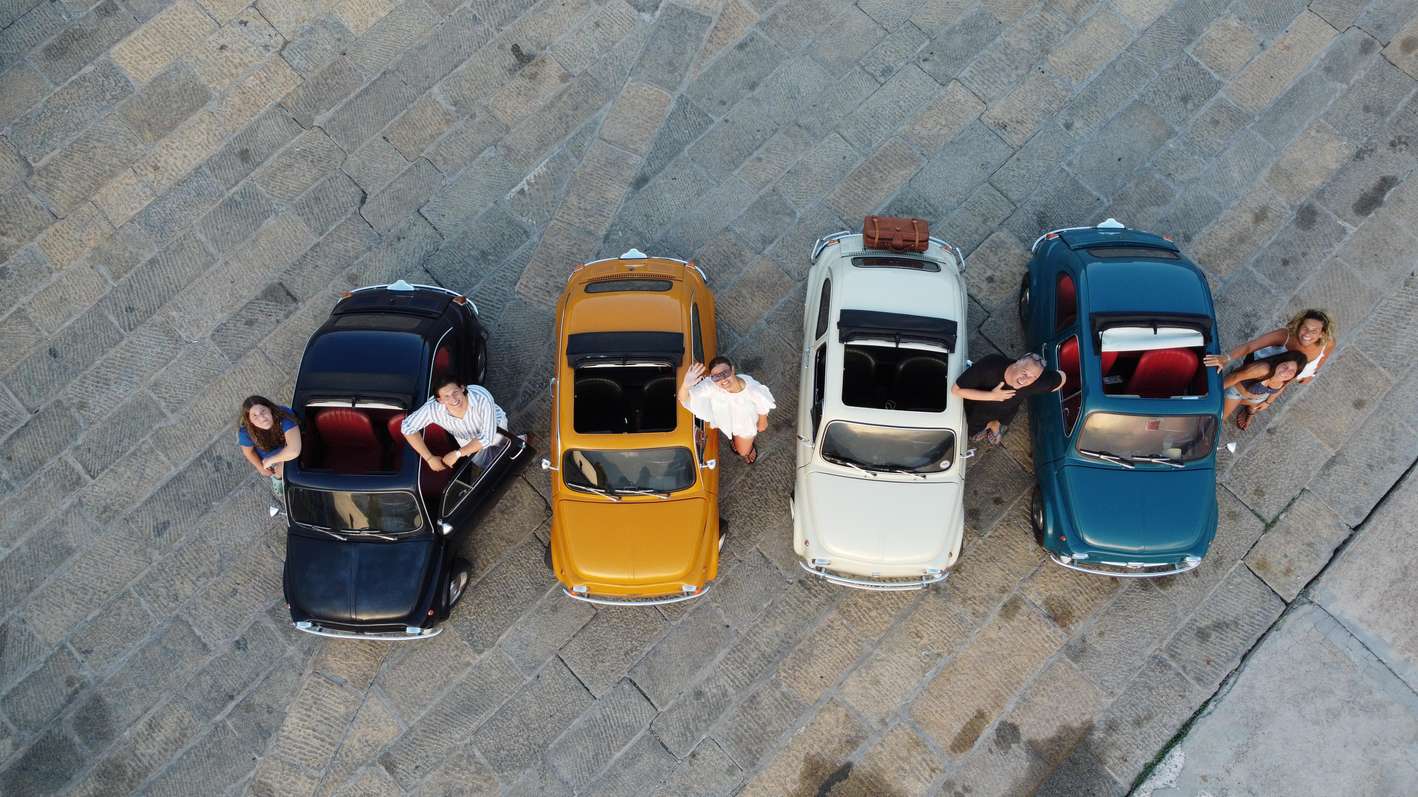
Cars travel in small convoys. On the Florence countryside tour each car takes up to 3 adults, or 2 adults and 2 children aged 3 to 12 who ride free. The Syracuse experiences are private, with one car per booking.
Lead time
Book early, especially for summer dates on the Amalfi Coast and in Tuscany. For the Tuscany experience, guides suggest reserving about 64 days ahead, and Sorrento and Amalfi cars go quickly in high season.
On the road
A vintage 500 has a manual gearbox with a knack of its own; smooth changes can call for double-declutching, and the steering and brakes feel older than a modern car's. Tours start with a briefing or lesson, and the guide keeps the pace relaxed.
Timing
Leave buffer around the drive. The Sorrento cabriolet must be back by 7 pm because of Sorrento's restricted zone, and on the coast, summer traffic can stretch the drive well beyond what the map suggests.
Who can driveCan stop the day
Drivers must be at least 18 and comfortable driving a manual car; automatic drivers cannot take the wheel on some tours. Tall travelers should think twice: the cabin is tight, and one Syracuse operator caps drivers at around 195 cm.
02
BookingHow far ahead, and what happens if plans change
1
Cancellation
Every self-drive tour on this page allows free cancellation up to 24 hours in advance for a full refund. That gives you room to move a date if the weather or your plans change.
03
Before you goPapers, health, what to bring
2
What's included
Inclusions vary more than people expect, so read the list before you book. On the Florence countryside tour you get the car, insurance, fuel, a radio link to the guide and a tasting. The Chianti short drive covers the lesson and the drive only. Fuel is included in Syracuse.
Florence countryside: car, guide, radio, insurance, fuel, ham and cheese tasting
Chianti 2-hour drive: driving lesson and drive; fuel is not included
Sorrento/Amalfi cabriolet: rental, insurance, hotel delivery, digital guide
Syracuse tours: car, lead car, briefing, fuel, water, photo stops
DocumentsCan stop the day
Bring a valid driving licence; a standard Category B licence is enough. Non-EU citizens also need an International Driving Permit carried together with the licence, and UK photocard holders are exempt. Some tours ask for a credit card or deposit for insurance.
04
On the dayWhere to be, when, and how you get there
1
Meeting point
Most tours start from a fixed spot in the tour's home city, such as a garage in Florence or an office in central Syracuse. Pickup is not standard on the self-drive experiences, so check where you need to arrive and when.
05
During the tourWhat is expected of you
2
Photos
Photo stops are built into the routes, from a church above Florence to terraces on the Plemmirio coast. The Sorrento rental comes with a digital guide to the best viewpoints, so you can plan your own.
Tipping
Gratuities are listed as optional or discretionary on the tours that mention them at all. You are never expected to tip, so leave it to your own judgment at the end of a good day.
Self drive vintage Fiat 500 - the guide to taking the wheel in Italy
A Cinquecento with your hands on the wheel, a country lane or a coastal bend ahead. The paperwork, the gears and the right destination decide whether the day sings. Here is how to get it right.
Florence· 43.75° N, 11.19° E
If you only remember three things
1
Every car is a manual, and the briefing at the garage covers the old gearbox before you go.
2
Non-EU drivers need an International Driving Permit carried with their national licence; sort it before you fly.
3
The Tuscan guides recommend booking about 64 days ahead, the Amalfi Coast about 75, or the good dates go.
Is a self drive vintage Fiat 500 in Italy worth it?
The car that waits for you in Florence is nothing like the modern Fiat 500 you have seen in city traffic.
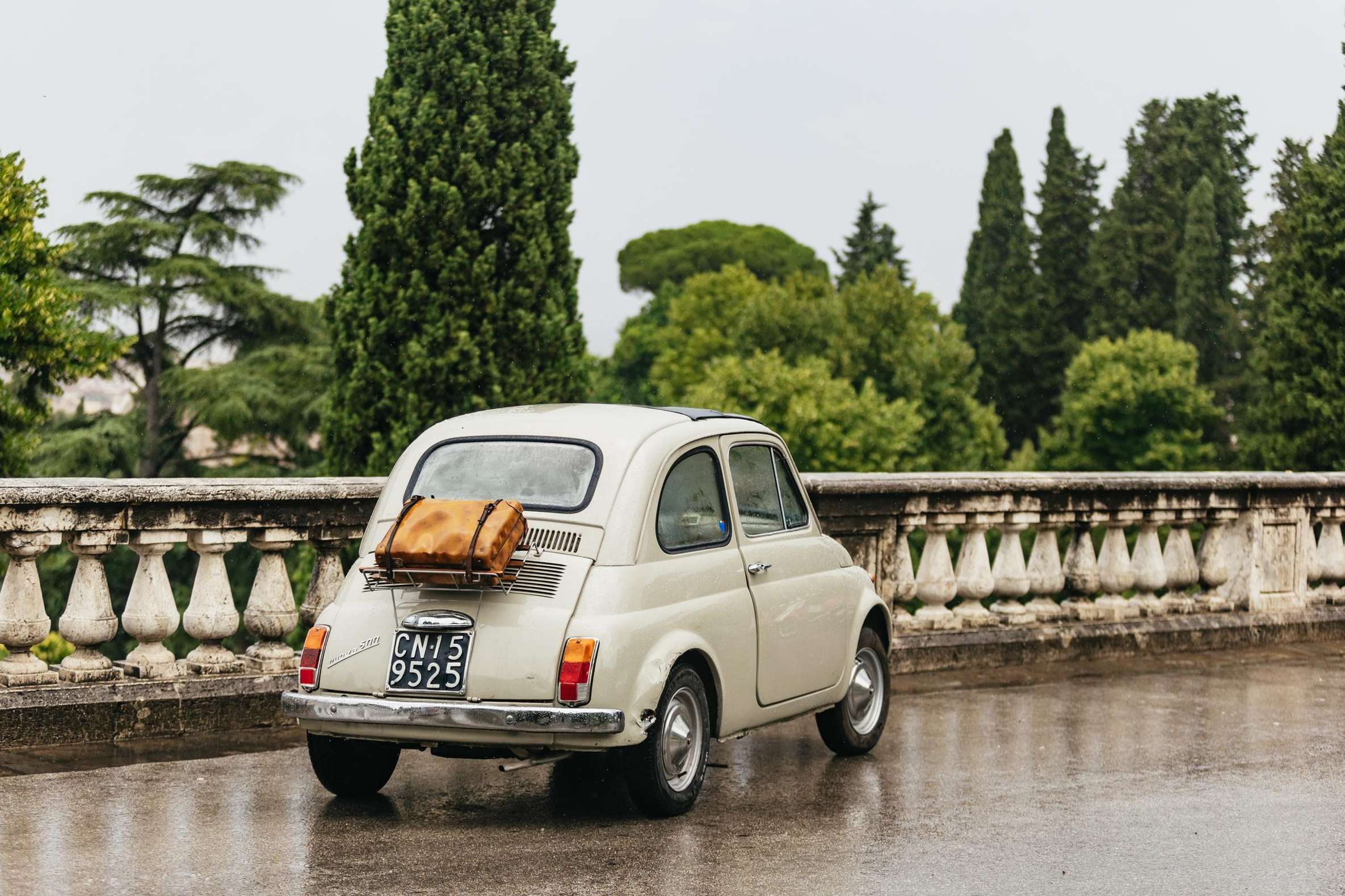
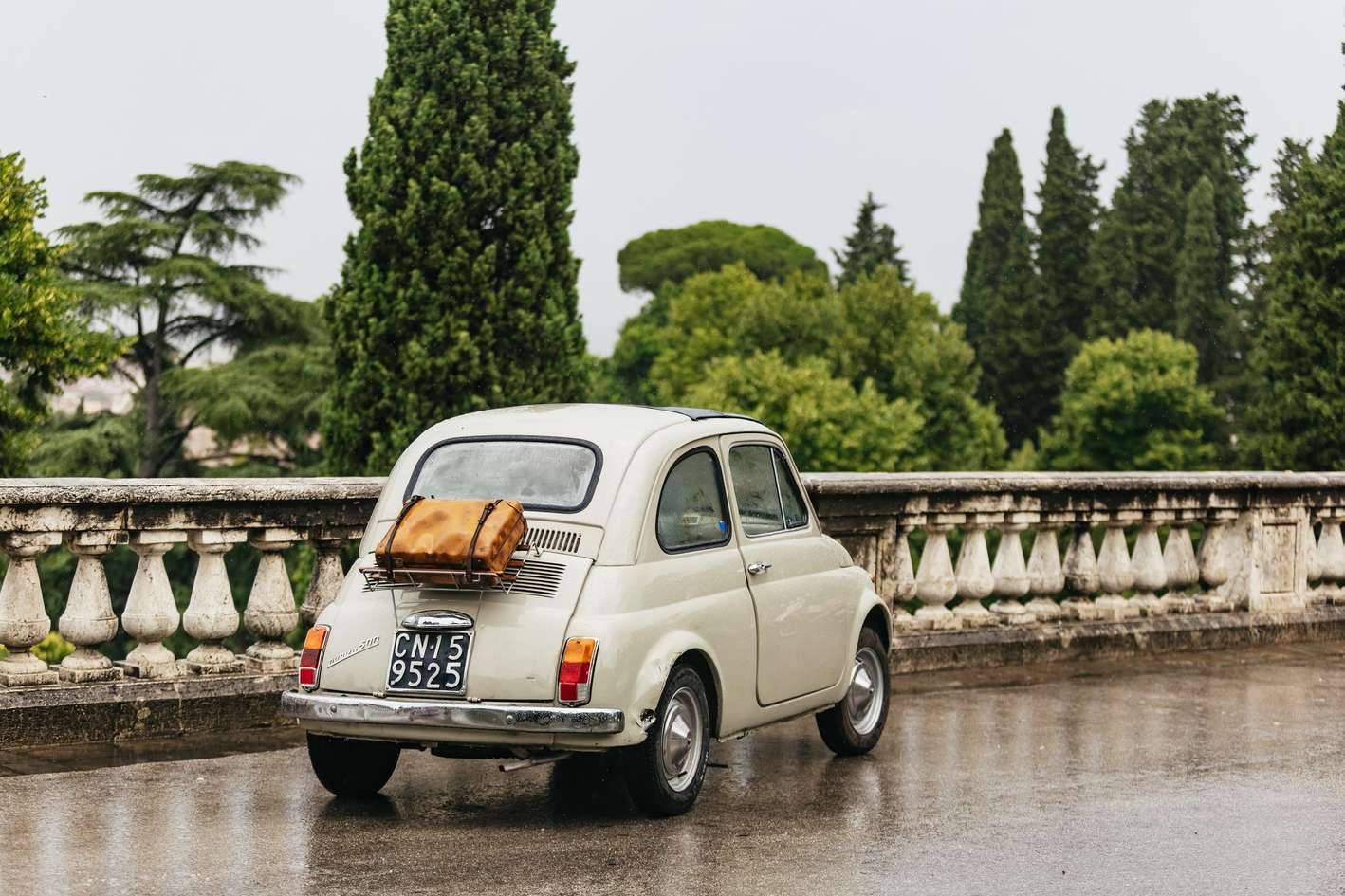
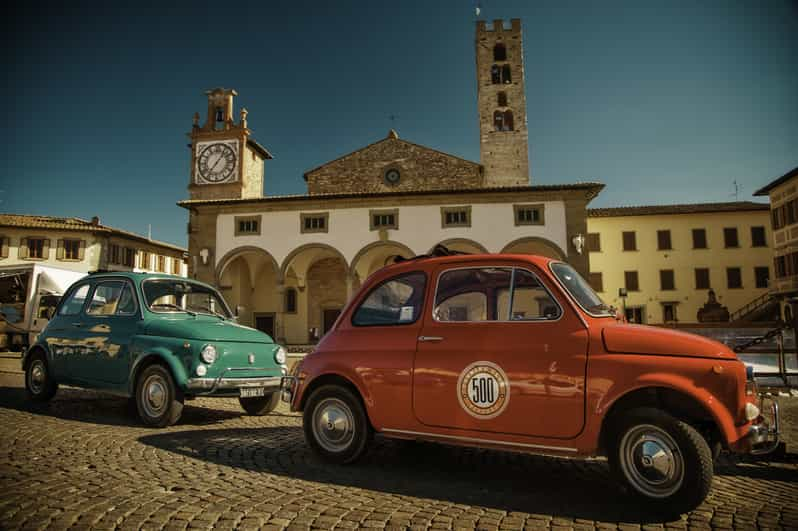
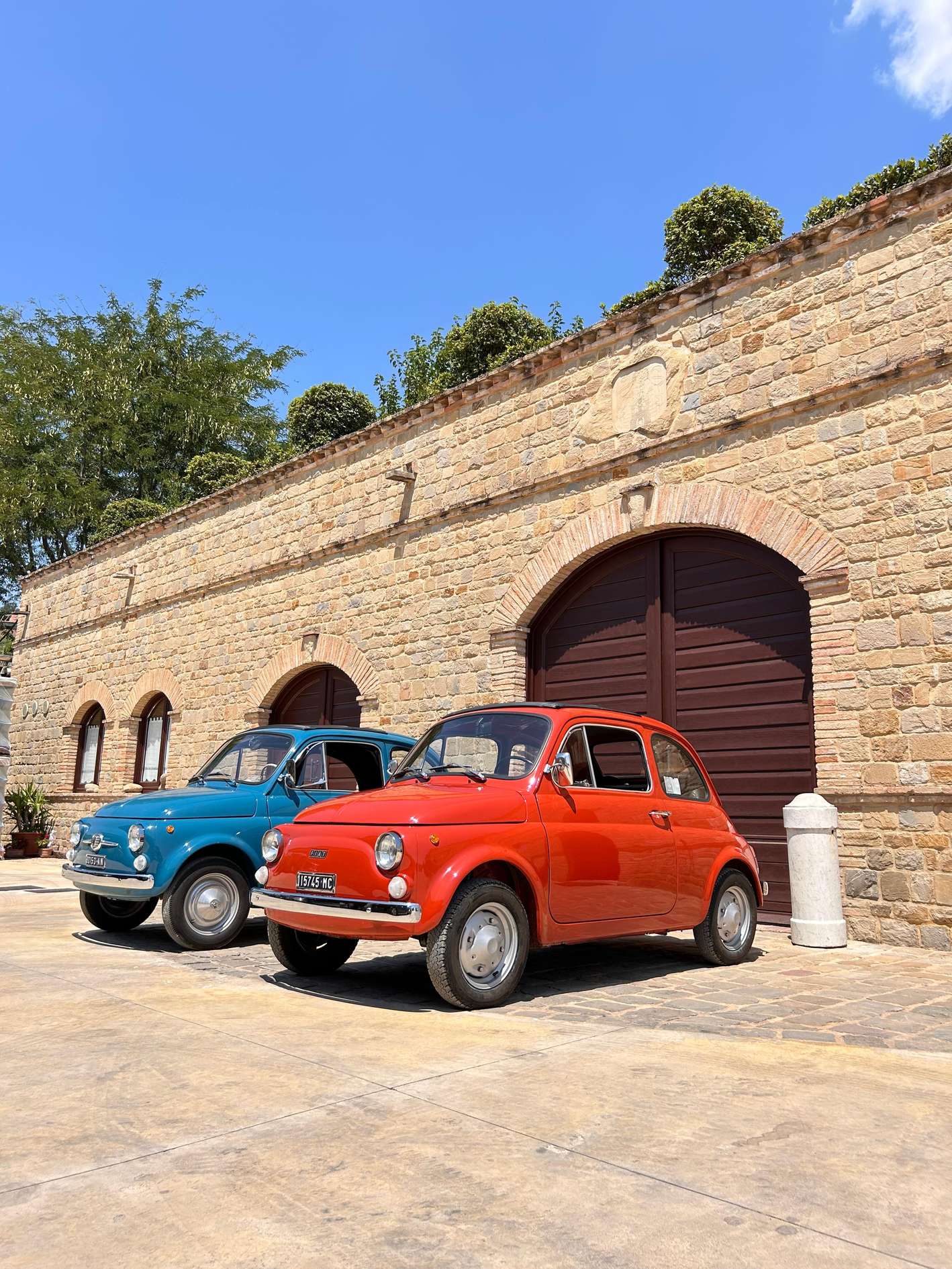
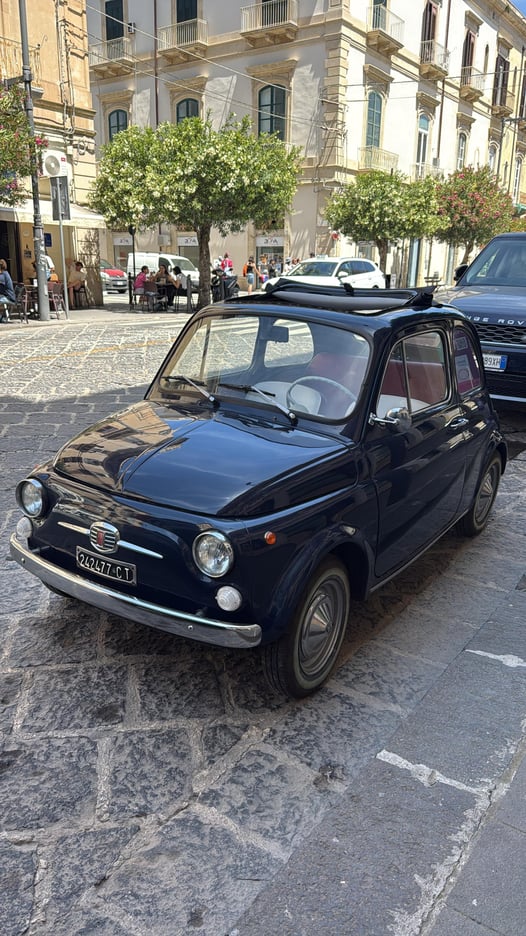
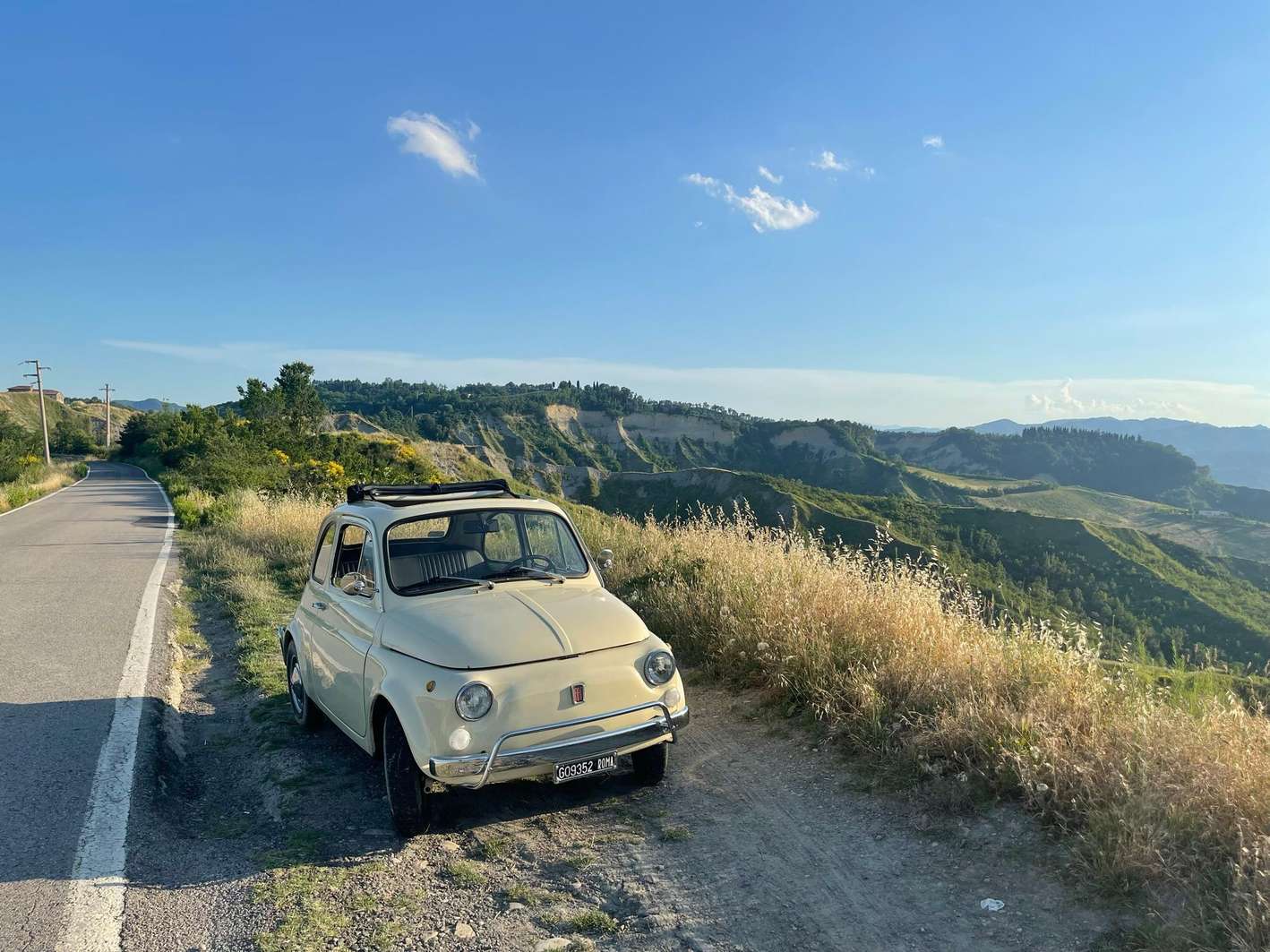
Italians call the classic one the Cinquecento: the Nuova 500 built from 1957 to 1975, with a rear-mounted, air-cooled two-cylinder engine and just under three metres of body. The 2007 car is longer, front-wheel drive and completely different underneath.
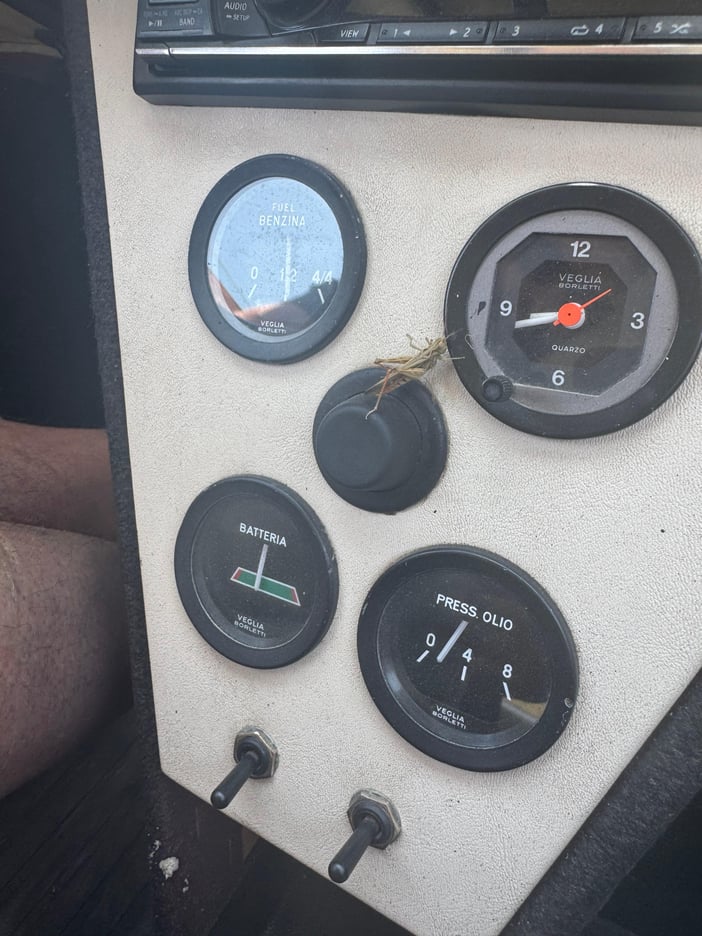
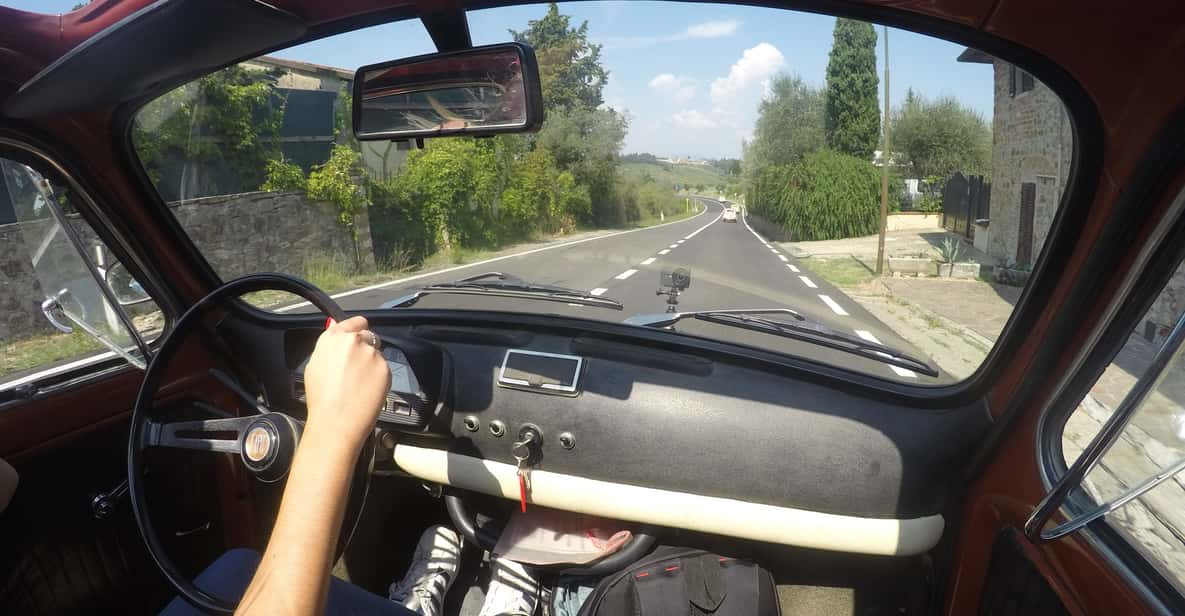
No power steering, no air conditioning, no radio. The steering wheel is light but unassisted, the gearbox wants your attention, and the drum brakes ask you to slow down earlier than you would in a modern car.
That sounds like a list of problems. On a slow country road it is the opposite: the car talks to you, and the drive becomes the part of the day you remember.
What nobody gets right about a vintage 500
MythIt is basically the modern Fiat 500 with a retro body
Reality
Different car altogether: rear engine, rear-wheel drive, and under three metres long, against three and a half for the new one
MythIt drives like any rental
Reality
No power steering, an unsynchronized gearbox that may need double-declutching, and drum brakes that reward planning ahead
MythThe old-car quirks spoil the day
Reality
They are the point. A small, light car on a slow, winding Italian road is exactly where it belongs
Keep the Cinquecento off the motorway and point it at a hill road instead. On a slow provincial road its small size and unhurried pace work for you, and the mismatch between this car and modern traffic disappears.
Tour for this
From Florence: Self-Drive Fiat 500 Tour in Chianti4.9★ (20) · 2 hours · Free cancellation
Where you can take the wheel on a Fiat 500 driving tour
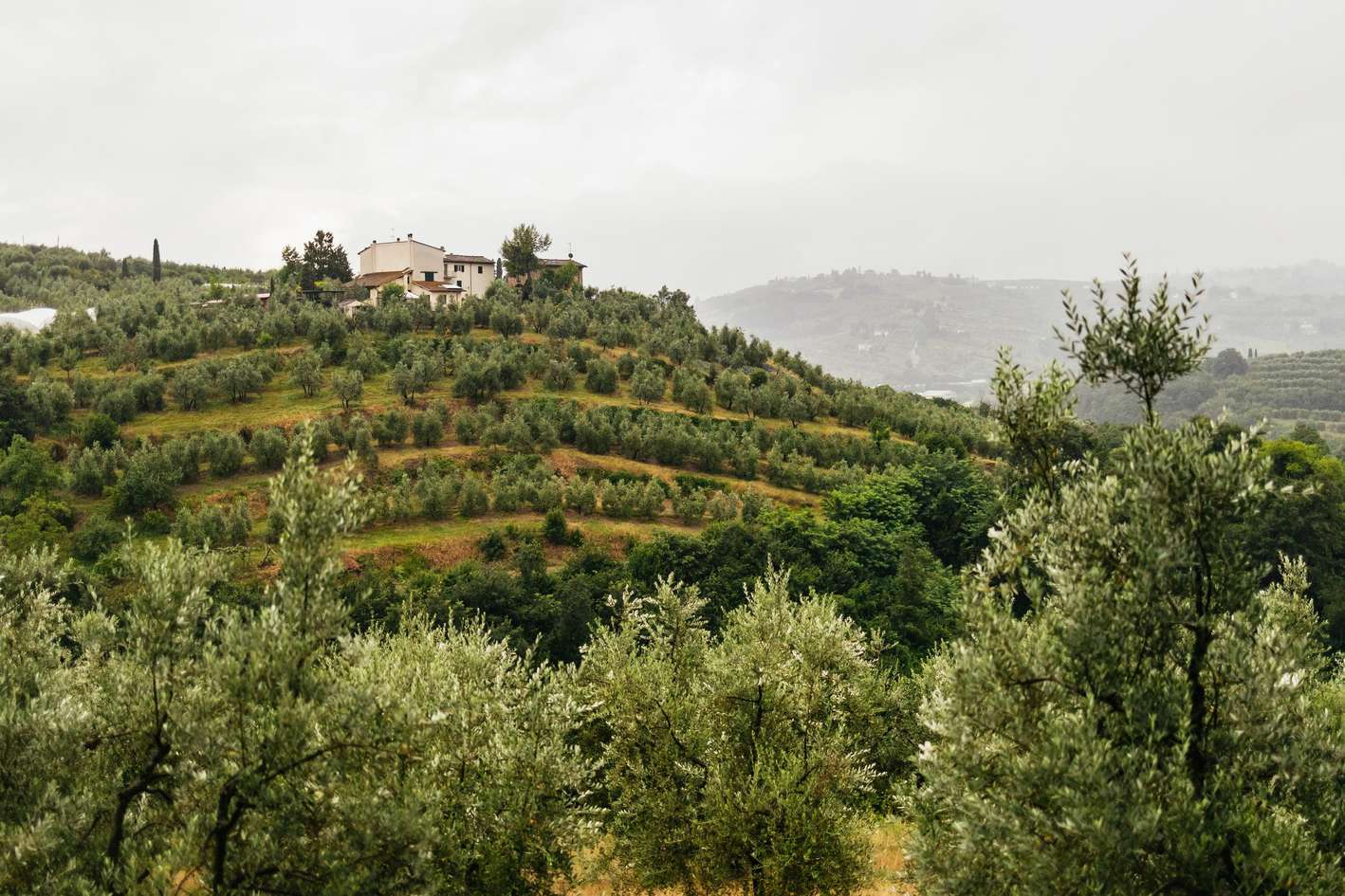
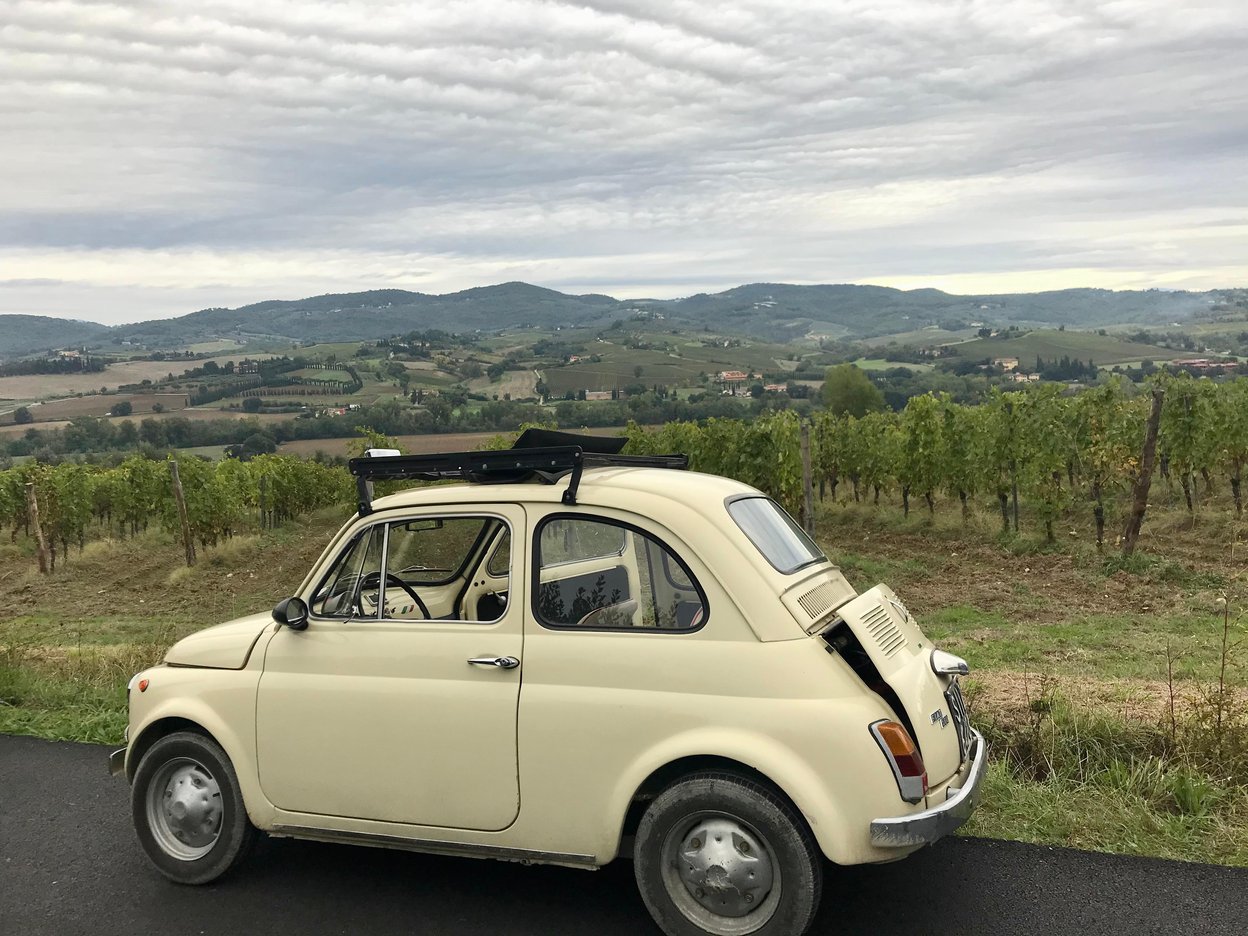
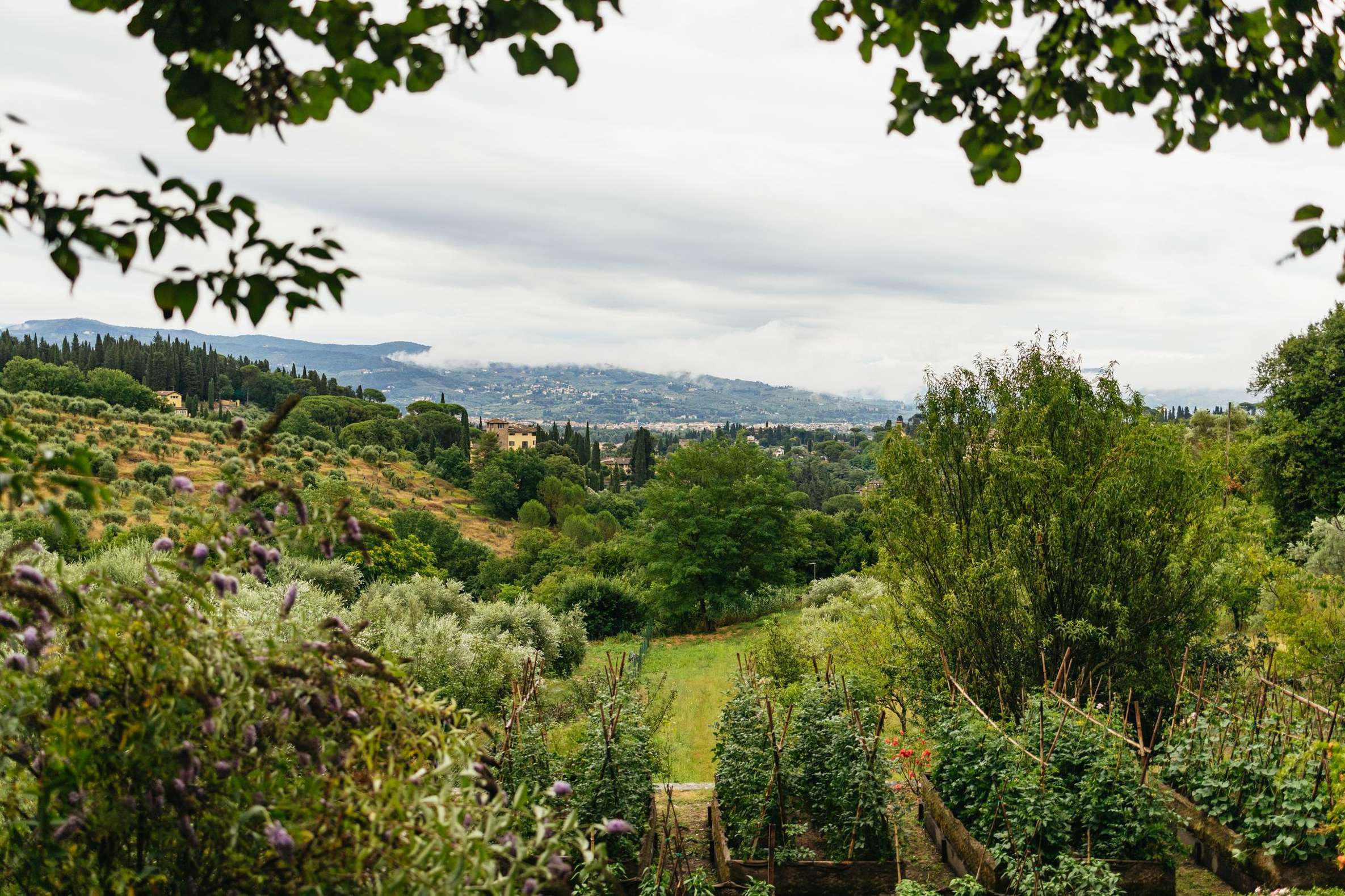
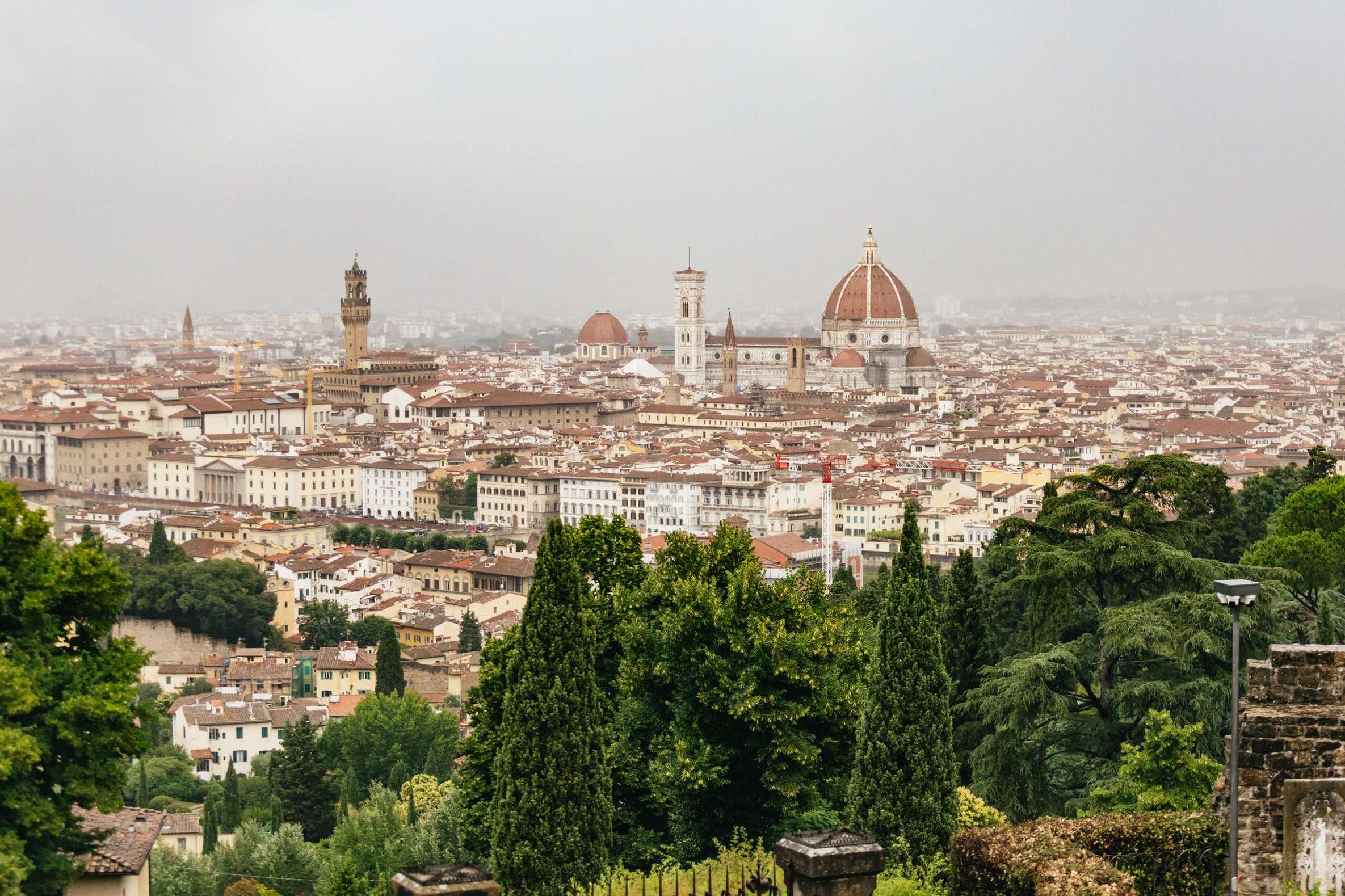
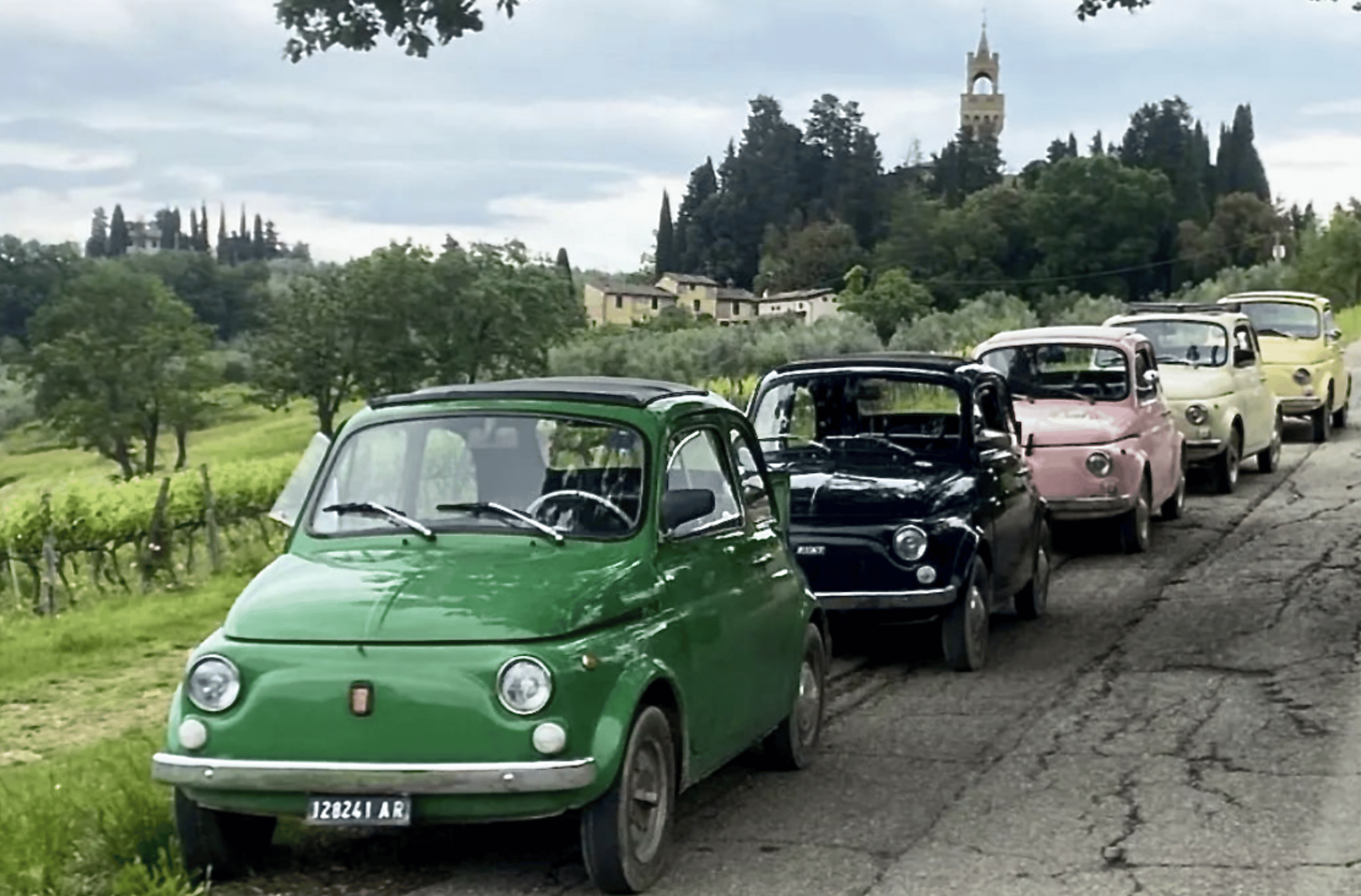
The choices come down to three landscapes. Around Florence, the cypress-lined roads of the self drive vintage Fiat 500 tour from Florence pass olive fields, historic villas and castles on the hills, and the Chiantigiana twists through compact wine towns with the countryside never far away.
On the coast, the road between Sorrento, Positano and Amalfi runs high above the sea through corkscrew bends, with panoramic terraces for photo stops.
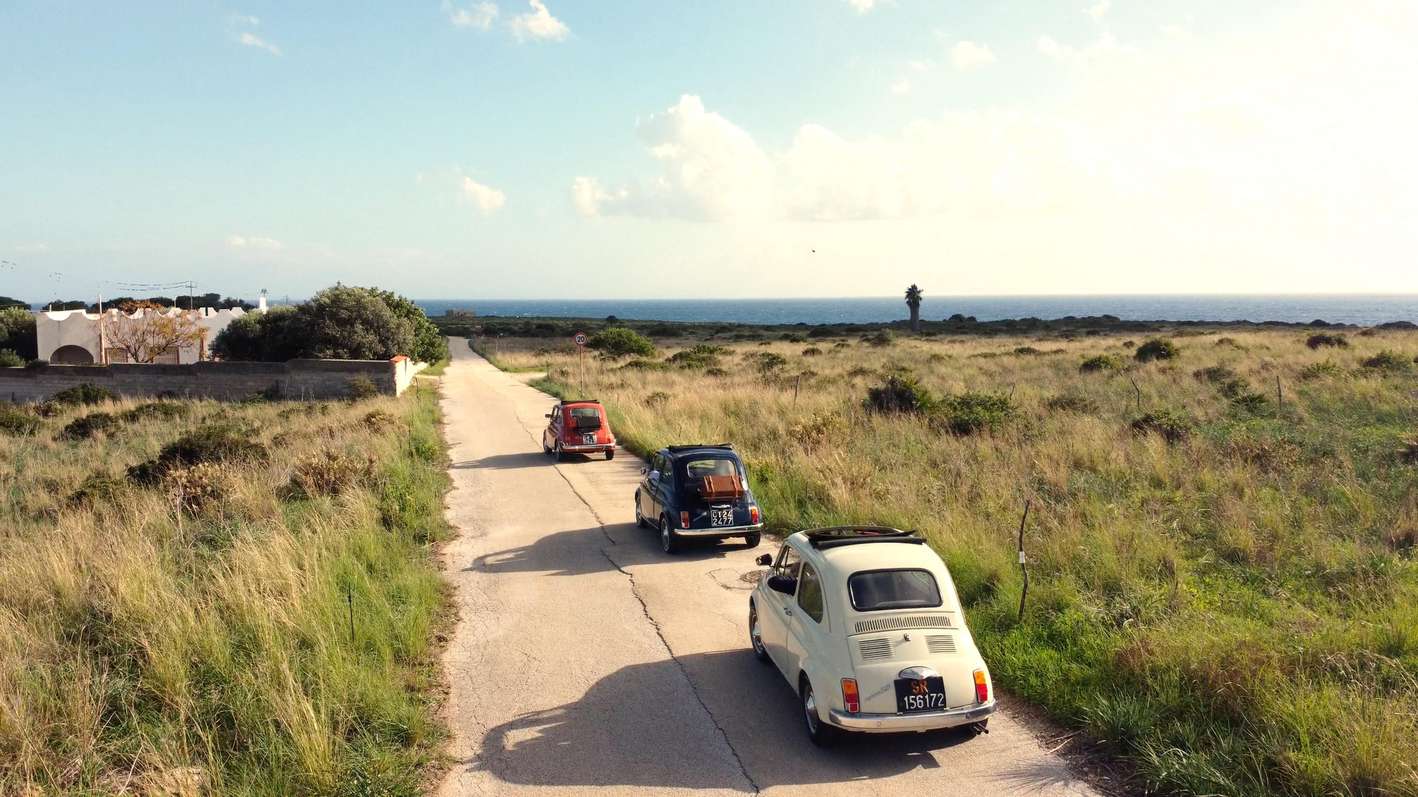
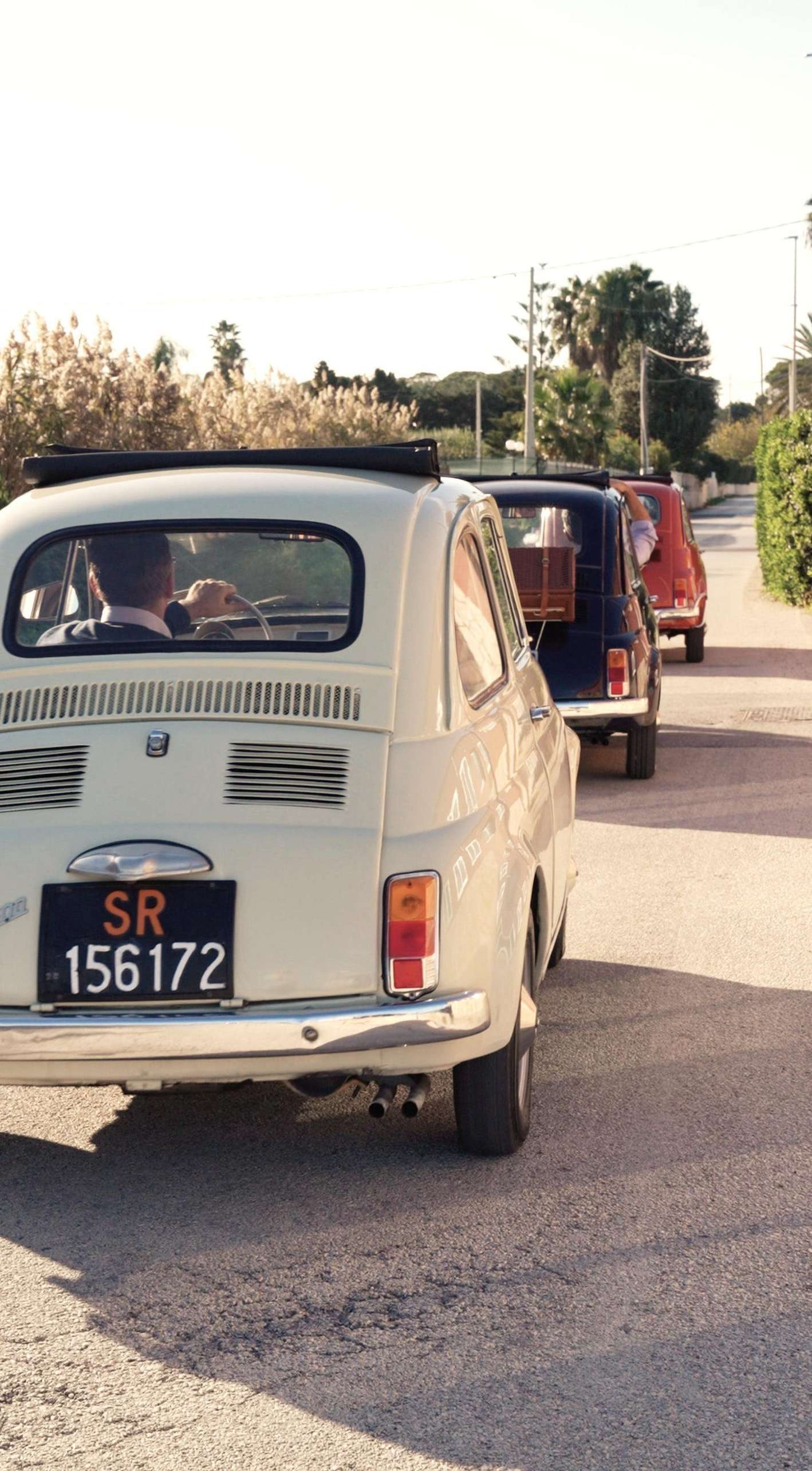
In Sicily, the Syracuse routes run from the old town of Ortigia out to the Plemmirio reserve, along a wild coastline with dry stone walls and, on clear days, Mount Etna on the horizon.
The strongest first choice for most drivers is the countryside. The Florence: Countryside Vintage Fiat 500 Driving Tour gives you five hours at the wheel, a guide in a lead car, a two-way radio to stay in contact, and a stop on a private terrace for Tuscan ham and cheese with a glass of Chianti.
Villages and quiet country lanes follow one after another, with photo stops built into the route.
Sicily suits drivers who want coast and the countryside in one morning. The Amalfi Coast suits drivers who have already handled narrow, busy roads and want the views that go with them.
Tuscany or the Amalfi Coast - which self drive vintage route suits you
Both roads are narrow and winding. The difference is who else is on them. Tuscan country lanes carry farm traffic and the occasional coach; the convoy format keeps the pace relaxed and the navigation simple. If narrow roads make you nervous, start in Tuscany, where the guide's car leads and the stops are generous.
The SS163 on the Amalfi Coast is another matter. It shares its width with buses, trucks and motor scooters, and traffic can jam badly in busy periods, stretching a short run into a long one.
Small cars are easier to place on it than large ones, but a small, wobbly vintage Fiat on a corkscrew bend above the sea takes sustained attention. The self drive rental there comes with a short training session and a digital guide to the best spots, so you are not working the route out alone.
Choosing your road
Tuscany
Amalfi Coast
Sicily
The road
Narrow, winding country lanes through vineyards and cypress slopes
The SS163, high above the sea with corkscrew bends
Coastal roads and quiet countryside around Syracuse
Traffic
Light, mostly farm vehicles
Buses, trucks and scooters, badly congested in peak periods
Local and light if you go slowly
How demanding
Careful but relaxed driving in convoy
Sustained attention on a narrow, busy road
Moderate; some hills are steep
Best for
A first vintage-car drive
Confident drivers who want the famous views
Drivers who want coast and old town in one morning
Tuscany
The road
Narrow, winding country lanes through vineyards and cypress slopes
Traffic
Light, mostly farm vehicles
How demanding
Careful but relaxed driving in convoy
Best for
A first vintage-car drive
Amalfi Coast
The road
The SS163, high above the sea with corkscrew bends
Traffic
Buses, trucks and scooters, badly congested in peak periods
How demanding
Sustained attention on a narrow, busy road
Best for
Confident drivers who want the famous views
Sicily
The road
Coastal roads and quiet countryside around Syracuse
Traffic
Local and light if you go slowly
How demanding
Moderate; some hills are steep
Best for
Drivers who want coast and old town in one morning
One rule to know before you pick a coastal date: in high season the SS163 carries an alternating-plate restriction between Vietri sul Mare and Positano, so your hired car may be barred on certain days between ten in the morning and six in the evening.
Tour for this
Sorrento/Amalfi: Fiat 500 Cabriolet Self-Drive Rental4.3★ (3) · 10 hours · Hotel pickup · Free cancellation
Behind the wheel - what it feels like to drive the vintage Fiat 500 yourself
The briefing comes first, and it matters. At the garage a guide introduces you to a car from the 1960s before you turn a wheel, and on the Chianti routes that includes the double-declutch. Some of these original gearboxes have no synchronization, so smooth changes mean matching the revs yourself, and downshifts take practice.
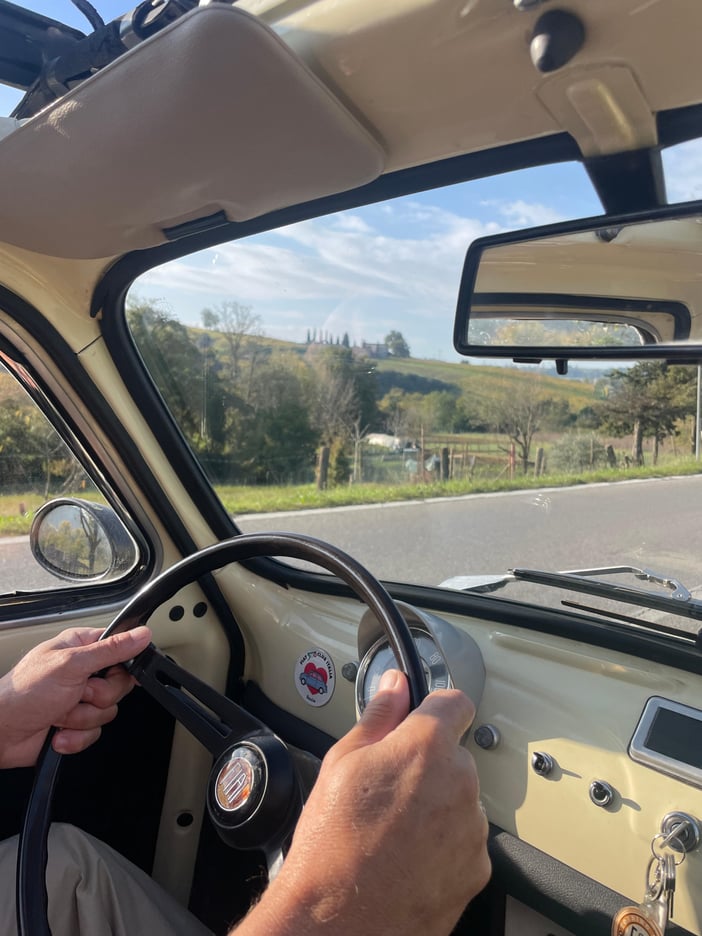
The first kilometres feel like a conversation with the road. Steering is light but unassisted, so parking and slow turns take more muscle than you expect.
The drum brakes work well when they are properly adjusted, but you learn to plan a stop earlier than you would at home. Drivers used to modern cars find themselves changing gear sooner and allowing more time to slow down.
What the car leaves out tells you what kind of day this is. There is no radio, no speakers, no air conditioning, no phone charger, no cigarette lighter. You hear the engine and the countryside instead.
What nobody tells you
Automatic-only drivers cannot take these tours
Every car is a manual, and operators are firm about it; the car needs an experienced touch
The briefing is not a formality
It covers the double-clutch and the controls you will not find in a modern car, and it is what makes the first hill road manageable
Expect to work a little
A vintage 500 can feel demanding and tiring next to a modern car; short stages and long stops suit it best
A day at the wheel of a Cinquecento is more involving than a modern drive, and that is exactly why people book it twice.
Tour for this
Florence Wine Tasting and Tuscan Lunch in a Vintage Fiat 5004.9★ (220) · 3 hours · Free cancellation
Licences and documents for your self drive vintage drive
The paperwork is simpler than it looks, but one piece has to be arranged at home. A Category B driving licence is enough for these vintage cars; several operators say so directly. The legal minimum age to drive in Italy is 18, and the Florence countryside tour sets its driver minimum there too.
The International Driving Permit is the piece to sort early. Non-EU citizens need one carried alongside their national licence, and the two documents travel together. EU licences are valid without it.
UK photocard holders do not need a permit in Italy, with the exception of Isle of Man licences. Americans can drive on a US licence, but an International Driving Permit or a certified Italian translation has to be with it.
Some operators add their own conditions on top. One Amalfi self-drive listing asks for an international licence specifically, and another Italian operator requires drivers to have held their licence for at least five years. Rental companies generally want a licence you have held for a year or more.
Read this before you book
Non-EU drivers without an International Driving Permit cannot legally drive Arrange the permit at home before you travel; an IDP supplements your licence and does not replace it, and without it the booking is wasted
Bring the licence itself on the day, plus an identity document and a credit card in the driver's name. If your permit is missing when you arrive, no briefing will fix it.
Tour for this
Syracuse Vintage Fiat 500 Tour - Drive the Dolce Vita5.0★ (10) · 40 minutes - 2 hours · Free cancellation
Getting to the start of your self drive vintage Fiat 500 drive
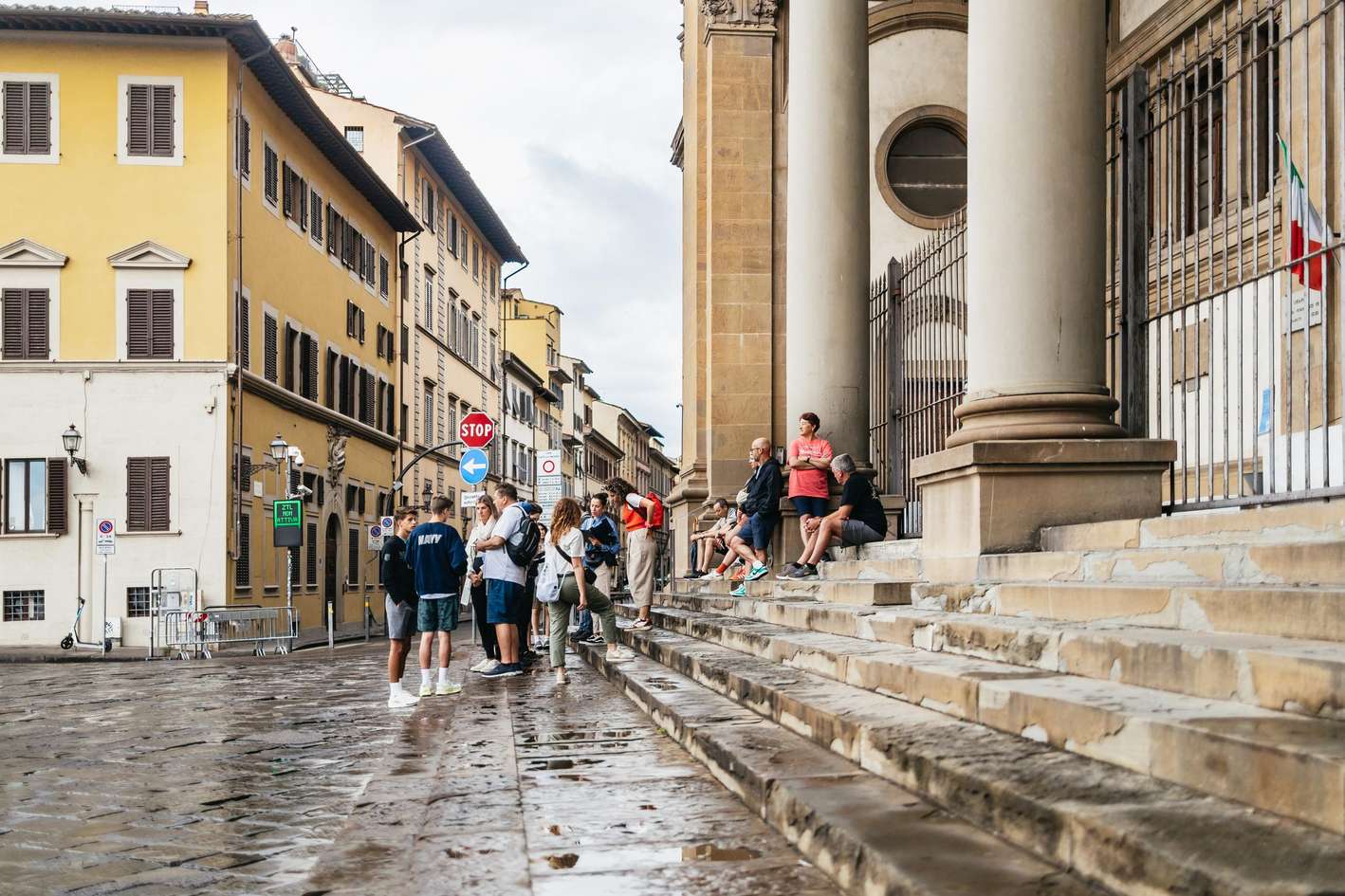
Each starting point has its own rhythm, and the drive to the drive is worth planning. In Florence, the pick-up garage sits a short hop from the centre, easy to reach without a car of your own.
Florence to Vintage Fiat 500 departure areas
FlorenceTuscany
8 km
Vintage Fiat 500 departure areasFlorence, San Gimignano and Chianti
The bus works for the Chianti villages, but the last one leaves in the evening, so an afternoon briefing and a return after dark do not combine well. Driving yourself to the start and leaving the hire car there is the simplest plan.
For the coast, the rental is delivered to your hotel in Sorrento or collected from the showroom, so the journey to the start is already handled before you turn a wheel.
Naples International Airport to Sorrento and Amalfi Coast
Naples International AirportCapodichino
73 km
Sorrento and Amalfi CoastSorrento, Positano, Praiano, Amalfi
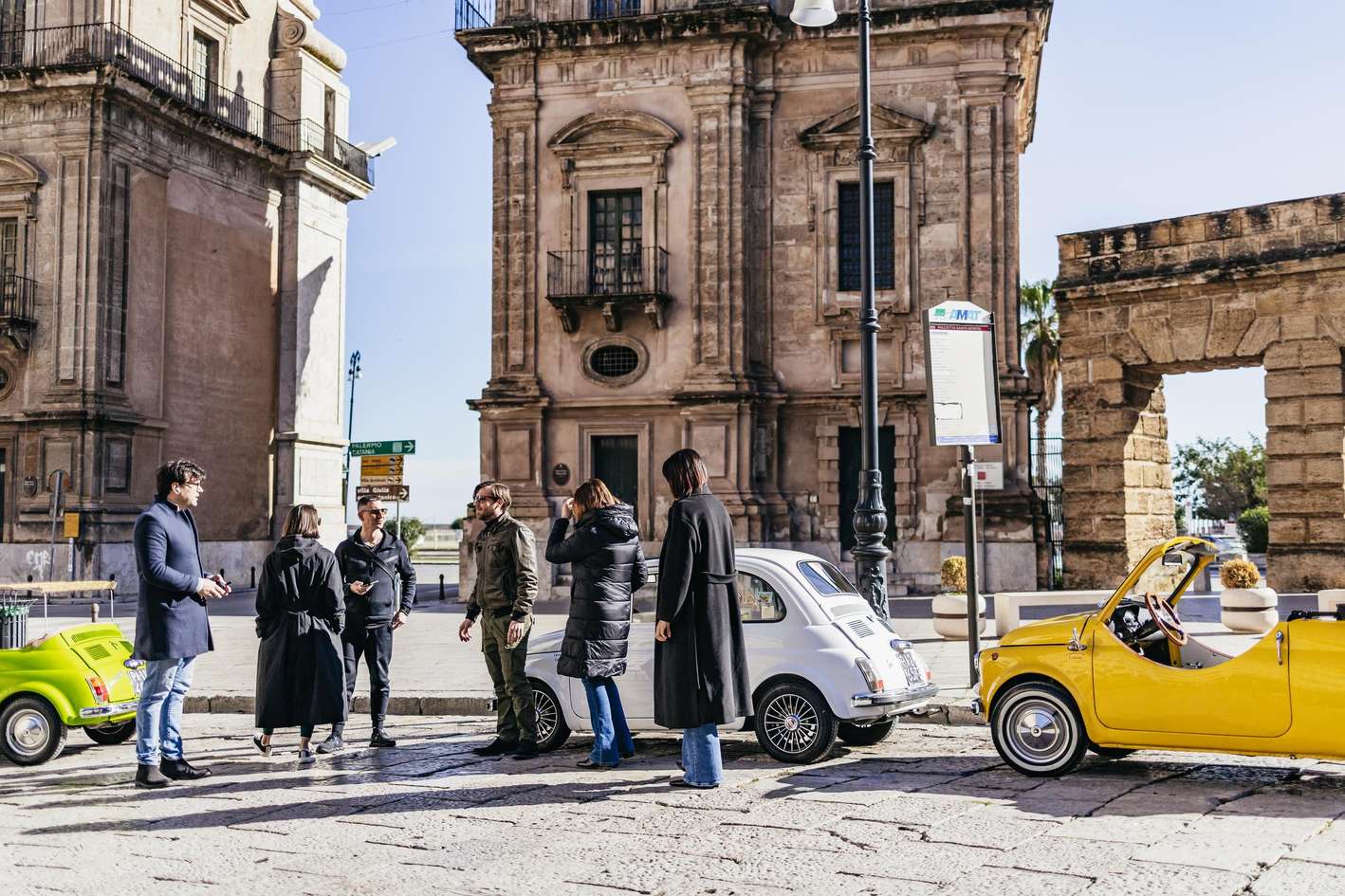
In Syracuse, the meeting point is an office in the city centre, and the Sicilian routes finish with a drop-off back in town among the Baroque streets of Ortigia.
Palermo, Via Fazello bus stop to Corso Umberto I 38
Whichever start you choose, arrive ahead of the briefing with time to spare. The session before departure is where you learn the gearbox, and arriving late means learning it on the road.
Tour for this
Marche: Tour in vintage Fiat 500 around Verdicchio hills4.6★ (5) · 2 hours · Free cancellation
Deposits, fuel and the true cost of a self drive vintage day
The sticker on the booking page is rarely the whole story, and none of the extras are large, but they add up if you do not expect them. The two to check first are the security deposit and the fuel policy.
Some operators hold a deposit on your credit card, a few hundred euros' worth, and return it when the car comes back undamaged. One Florence area drive asks for cash or a passport instead.
Fuel splits three ways. Some tours include it, one Amalfi rental excludes fuel used during the trip, and a couple of the Tuscan outings collect a small fuel surcharge per car on the day, a response to rising pump prices.
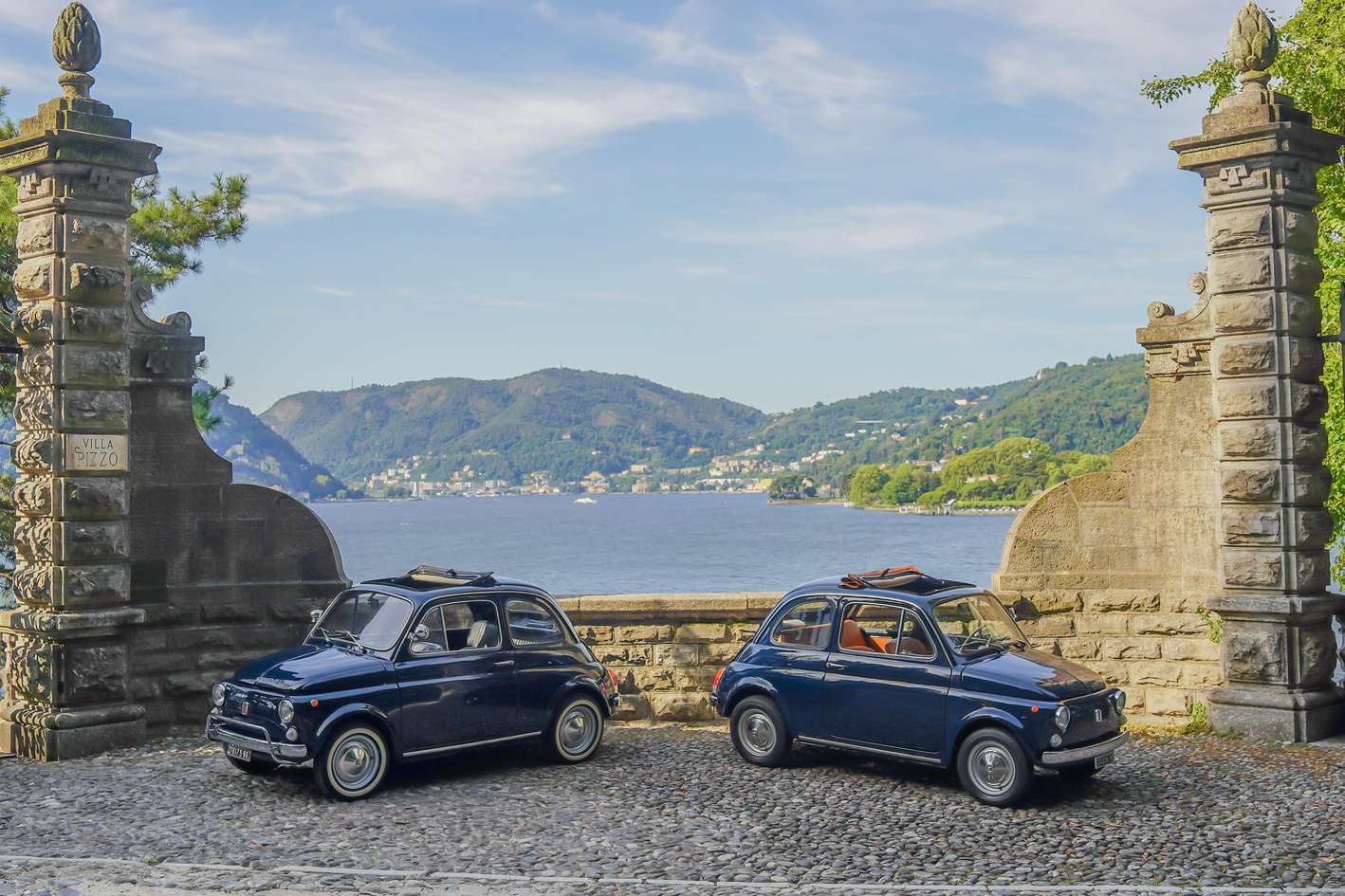
Kilometres matter too: a rental around Lake Como includes a fixed distance and charges beyond it, while one guided tour includes fuel and unlimited distance.
Insurance deserves a read as well. Third-party liability is commonly included, and the Florence countryside tour adds driver insurance, but collision or comprehensive cover is often excluded, with an optional upgrade that caps the deductible.
What is genuinely covered varies more than the formats do. Read the inclusion list the way you would read a menu: what drives, what sips, what gets charged on the day. Then the number on the card is the number you pay.
Tour for this
Corsica: Golden Hour Tour in a Vintage Fiat 5005.0★ (1) · 3 hours · Free cancellation
ZTL zones - the rule that turns a good day into a fine
Italy's historic centres are ringed by restricted-traffic zones, the ZTLs, and a vintage Fiat 500 has no automatic right to enter one. Cameras read number plates at the gates and fines are issued automatically, often reaching the driver weeks after the holiday has ended.
Florence shows how the system works. Its ZTL covers the historic centre, applies to rented cars exactly as it does to private ones, and runs weekday mornings to evening and Saturday afternoons, with summer nights added from April to October.
Road parking inside the zone is not allowed; garages outside it cost less. If your hotel sits inside the zone, the facility needs your vehicle details within three hours of entry or the fine stands.
The habits that keep the day clean are simple. Park outside the historic centre and walk in. Check the signs before you leave the car: blue-lined bays are paid, yellow ones are reserved.
Towns vary, so what applies in one Chianti village does not apply in the next; Monteriggioni bars unauthorised cars at all times, Castellina restricts its centre by permit.
The coastal rental writes the same rule into its terms: the car must be back in Sorrento by seven in the evening because of the ZTL. Return on time and the zone stays a footnote.
Wine tastings, lunch stops and drink rules on a self drive vintage outing
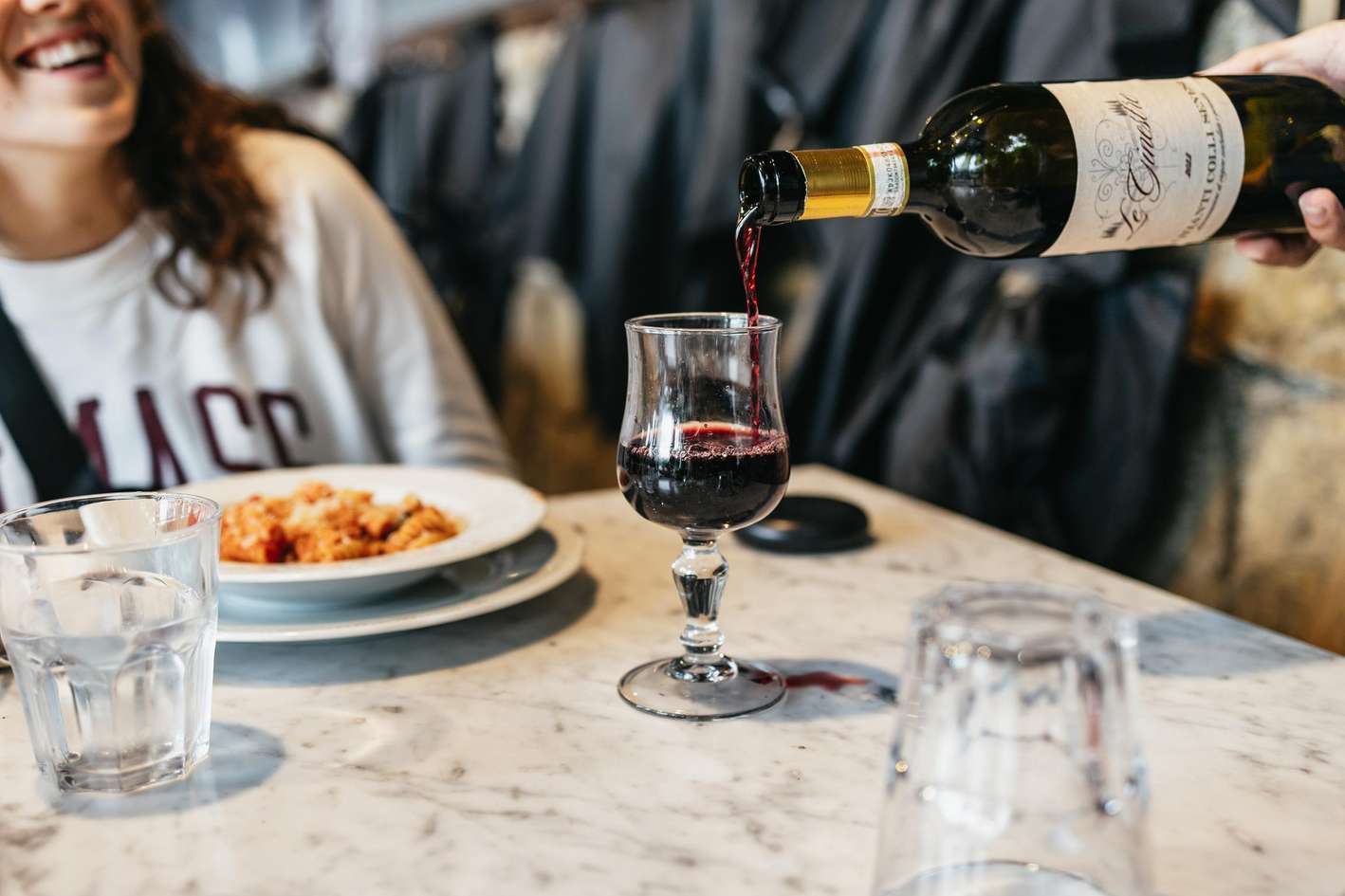
The Tuscan dream pairs the drive with a winery, and the tours handle that pair in two different ways. The countryside drive includes a Tuscan ham and cheese tasting with a glass of Chianti, and leaves the nominated driver to keep it at that.
The wine-and-lunch outing visits a Renaissance-era villa's vineyards for Chianti and olive oil with a light lunch, and solves the problem differently: a professional guide leads and the route runs on quiet secondary streets in convoy, but guests do not drive it after tasting.
The law behind that caution is firm. The general blood alcohol limit for most drivers in Italy is 0.5 grams per litre, and above that up to 0.8 is an administrative violation, above 0.8 a criminal offence that can cost a licence or worse.
The limit is zero for drivers under 21, for newly licensed drivers in their first three years, and for professional drivers.
RecommendedThe one-glass rule: If you are driving after a wine tasting, limit yourself to one glass The limit for most drivers is 0.5 g/L, and one glass keeps you comfortably inside it Zero limits apply to drivers under 21 and to those in their first three years of licence For them, any tasting that involves driving means abstaining
The straightforward plan: pick the tour whose format matches your plans, a driver-led one if you want to taste properly, a self-driven one if you want the wheel and can stop at a sip.
Tour for this
Florence Wine Tasting and Tuscan Lunch in a Vintage Fiat 5004.9★ (220) · 3 hours · Free cancellation
These cars are few and the summer demand is not, so the calendar decides more than the itinerary does.
The guide who runs the Tuscan drives puts the recommendation at about 64 days ahead; that figure comes from the operators of the experience itself, and it is the one to plan your Tuscan date around. Treat two months as your floor.
The Amalfi Coast asks for more. Advice for the coast's busiest months says book about 75 days ahead, and for a summer self-drive cabriolet, several months, because the cars go fast.
Rentals follow the same logic; a summer hire car is worth arranging 10 to 12 weeks out, earlier still for popular locations. For a peak-season countryside drive near Lucca, the advice stretches to about 84 days.
Timing within the day matters as much as the date. Early morning gives calmer streets and softer light for photo stops, which is why some photographers' options start at dawn.
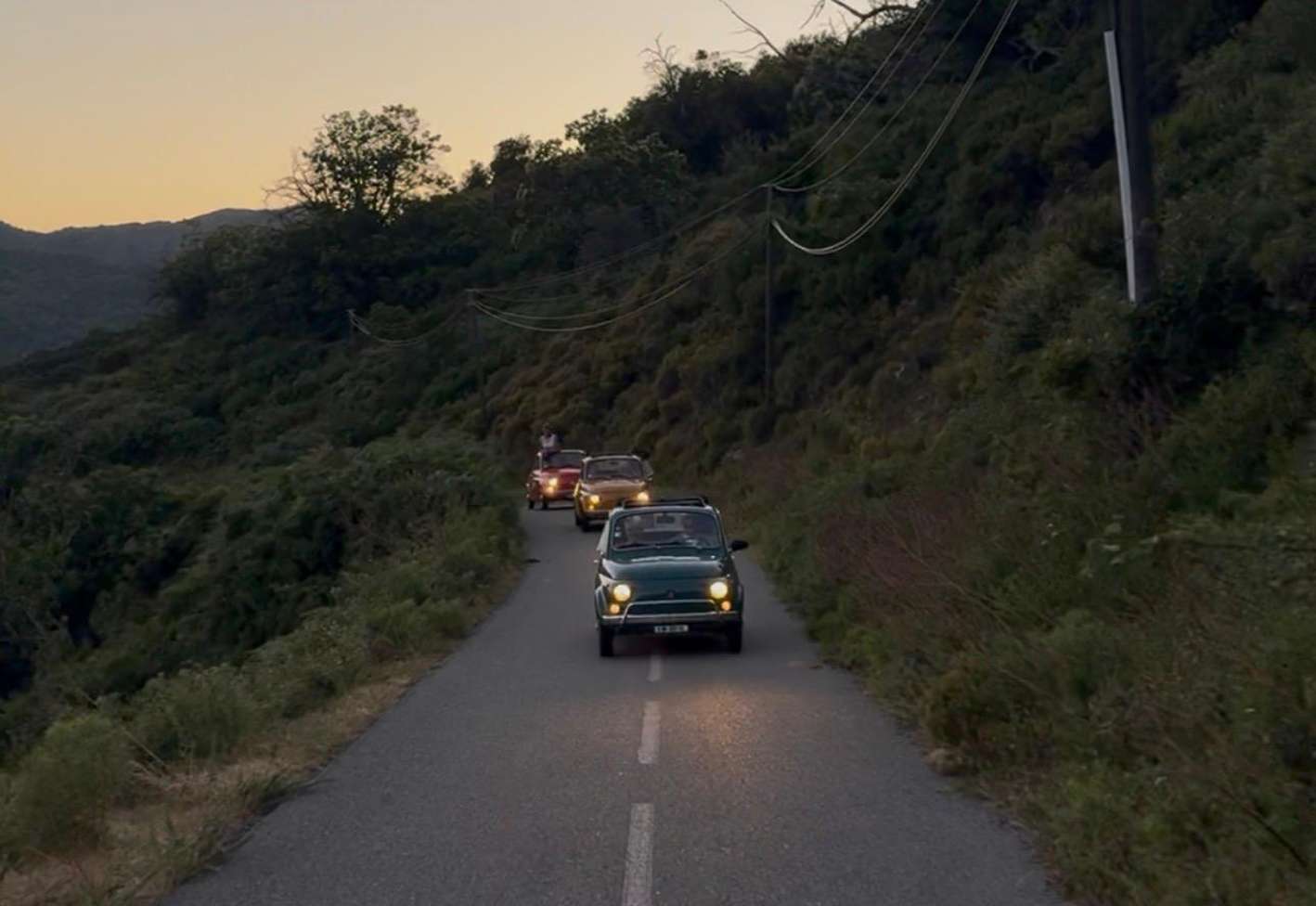
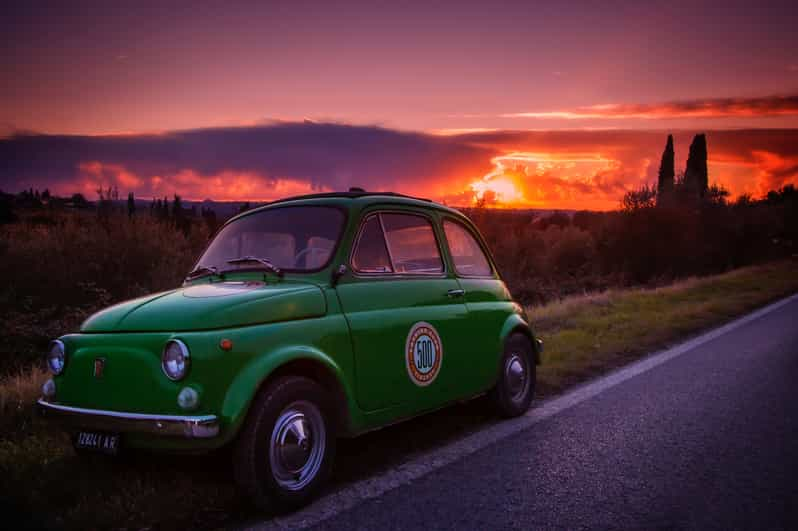
Early evening brings golden-hour views and illuminated landmarks with the daytime crowds gone. On the coast, an early start is recommended outright for the best photos.
So set the Tuscan date about nine weeks out, the coastal one at two and a half months, then pick a start time for light rather than convenience.
What to bring on a self drive vintage drive, and changing plans
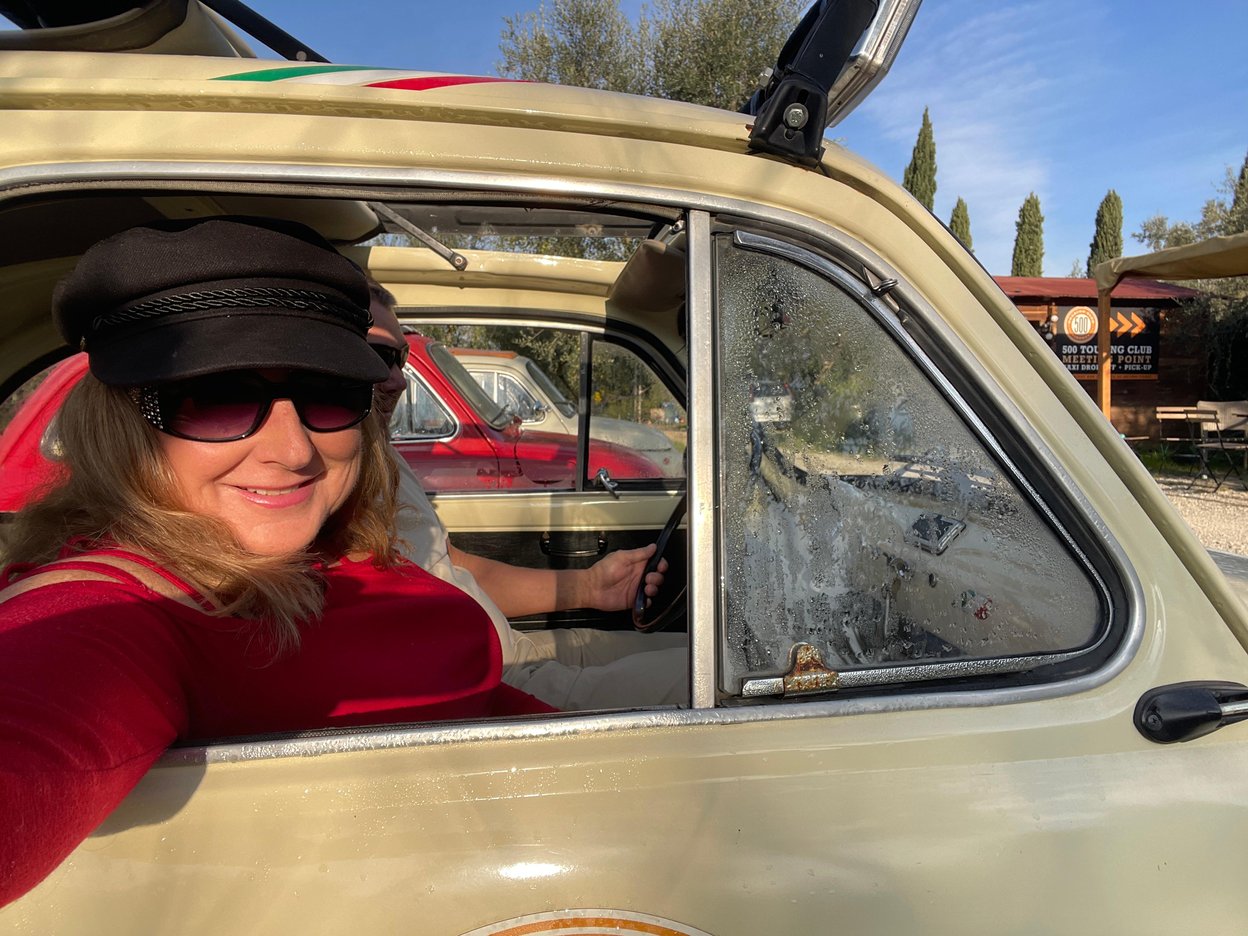
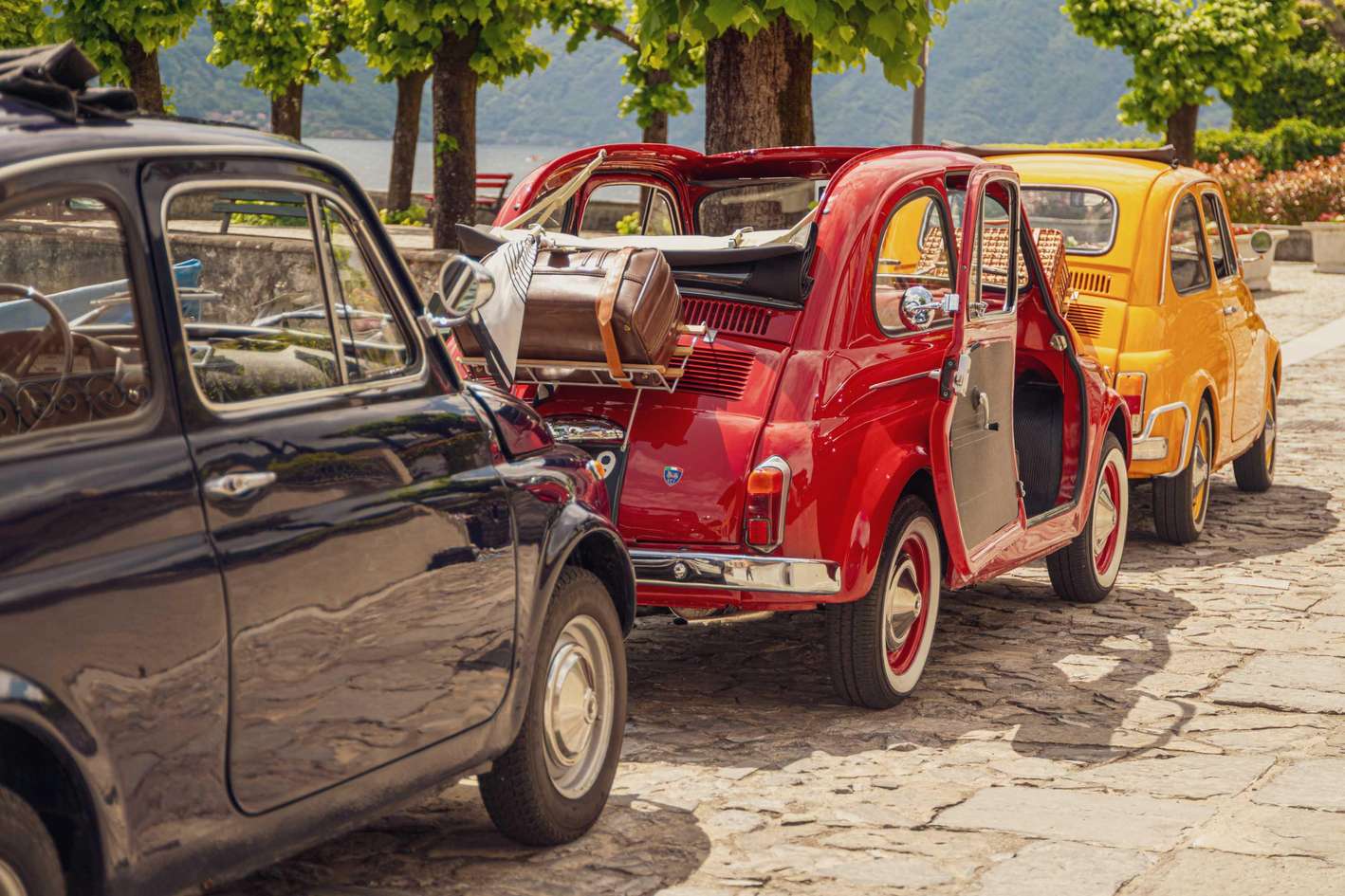
An open-top 1960s car sets the packing list for you. Expect wind and sun in a cabriolet, so sunglasses come first and hats need to be kept secure.
Comfortable clothes work for the driving; closed-toe shoes earn their place when you are climbing in and out at photo stops, which the day involves more often than you expect.
A light jacket or an extra layer covers the stretch after sunset, when an open car cools quickly. Sunscreen and a camera belong in the bag too.
Weather rarely stops the day. Light rain usually means the ride continues, with ponchos handed out, and a heavy downpour before departure can simply mean switching to a Fiat with a roof.
Severe weather is different: some coastal outings do not run in bad weather at all, and operators may cancel in extreme conditions and offer another date or a full refund.
If plans or weather change
If this happens
What happens then
Light rain on the day
The drive usually continues; you may be offered a roofed Fiat instead of the open-top one
Severe adverse weather
Rescheduling subject to availability, or an alternative date or full refund where the operator cancels
Cancellation by you
Nearly all the self-drive tours here allow cancelling up to 24 hours in advance for a full refund
The car cannot be repaired
Mechanical assistance applies, and the booking is fully refunded where the vehicle cannot be fixed
Book with a date you can defend and keep the 24-hour window in mind; the change rules then stay a footnote to the day.
The car is the spine of the day; the stops make it a trip.
On the Tuscan routes, the drive itself hands you the program: hill towns close enough to park below and walk into, panoramic terraces for the photo you came for, and the ham-and-cheese terrace where the convoy pauses with the hills in front of it.
Around Sorrento and the coast, the rental's digital guide points to the best spots between Positano and Amalfi, and the freedom to stop wherever the mood strikes is the strongest argument for taking the wheel yourself.
In Syracuse, the drive ends with a drop-off in Ortigia, where Baroque streets, Greek ruins and the sea sit within a few minutes' walk of each other.
A few habits make the extras easy. Keep stages short; a vintage 500 is happiest at a slow pace with long stops. Plan lunch at a destination rather than en route, since parking inside a historic centre is its own problem.
And leave the afternoon's last hour unbooked, because a viewpoint or a village square has a way of holding you longer than planned.
The day stays flexible because the car is small and the roads are slow. Let it.
Leo made sure everyone was comfortable driving manual and explained the old cars. So knowledgeable, kept the group together. Our favourite Florence experience - the Tuscan countryside was a beautiful change of pace!
A self-drive vintage Fiat 500 is at its best on slow, narrow Italian roads, with a manual driver who sorted the licence early and booked two months out. Tuscany is the confident first choice; the Amalfi Coast rewards experience. Know the gearbox before you go, park outside the old towns, and the day runs itself.
Go ifYou drive a manual confidently and want the wheel in your own handsYou can arrange an International Driving Permit at home if your licence is from outside the EUYou are booking two months or more ahead of a summer trip
Skip ifYou have only driven automatics; every car here is a manualNarrow, busy roads unsettle you and you would rather ride with a guideYou are deciding inside a week of a peak-season date
Self drive vintage Fiat 500 tour questions, answered
Quick answers to the things people ask before taking the wheel of a vintage Fiat 500, from licences and gearboxes to booking ahead.
Florence2026
Third bend on the Chiantigiana, cypresses everywhere, the little engine singing. Book about two months ahead, and practise your double-clutch before you come.
Is a self drive vintage Fiat 500 tour hard if I usually drive an automatic?
Every self-drive Fiat 500 on these routes has a manual gearbox, and the tours are firm about it: drivers must already be comfortable with stick shift, and one operator rules out automatic drivers entirely. The non-synchromesh box needs double-declutching on downshifts, and the guide teaches this before you set off.
Is driving the Amalfi Coast dangerous?
The coastal road runs high above the sea with corkscrew bends, and it also carries buses, trucks and scooters, so it takes your full attention. If that sounds daunting, note that the Amalfi option on this page is a rental with a training session, and Tuscany's rural lanes are a gentler first drive.
Is it easy to drive in Amalfi Coast towns in a small vintage car?
In a vintage Fiat 500, plan for the road rather than the towns: the SS163 is narrow and busy in season, and the combination of an old, light car and winding bends can feel demanding. Sorrento rentals must be back by 7 pm because of the town's restricted-traffic zone, so build your day around that.
What makes the Chianti countryside worth the drive itself?
The hills around Florence mix vineyards, olive groves, cypress trees and old stone farmhouses, and the Chiantigiana road twists around hillsides and dips into wooded valleys. The self-drive Fiat 500 tour from Florence lists the Chianti Hills among its stops.
Tuscany or the Amalfi Coast for a nervous first-timer?
Tuscany's country roads are narrow and winding too, so neither route suits a very anxious driver. Between the two, Tuscany's quiet secondary lanes at a relaxed convoy pace are the gentler choice, and the guide stays in radio contact the whole way.
How far ahead should I book?
For a self-drive vintage Fiat 500 tour in Tuscany, the guide suggests booking about 64 days ahead. For a summer trip generally, plan ten to twelve weeks out, and earlier still for popular locations.
What licence do I need to drive a vintage Fiat 500 in Italy?
A standard category B licence is enough for the vintage cars, and drivers must be at least 18.
If your licence is from outside the EU, carry an International Driving Permit alongside it; UK photocard holders do not need one in Italy. Bring your licence to the tour, and a credit card where the operator asks for one.
Can I taste wine and still drive myself?
Yes, within limits: the legal blood alcohol limit for most drivers in Italy is 0.5 g/L, with a zero limit for drivers under 21 and the newly licensed. If you are the nominated driver on a wine-tasting tour, stick to one glass, or choose the Florence lunch tour where a guide drives instead.
Can I drive a vintage Fiat 500 in Rome myself?
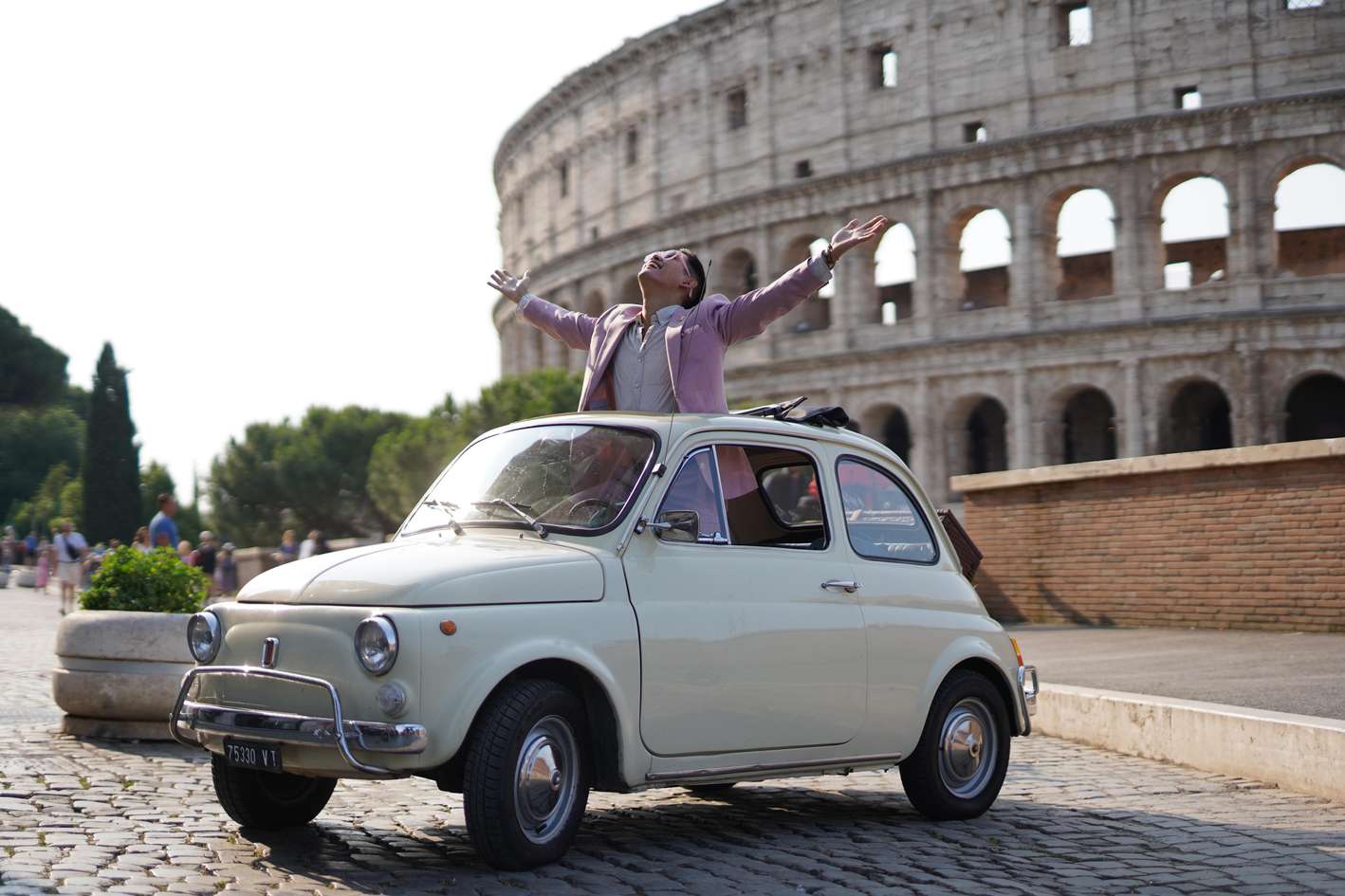
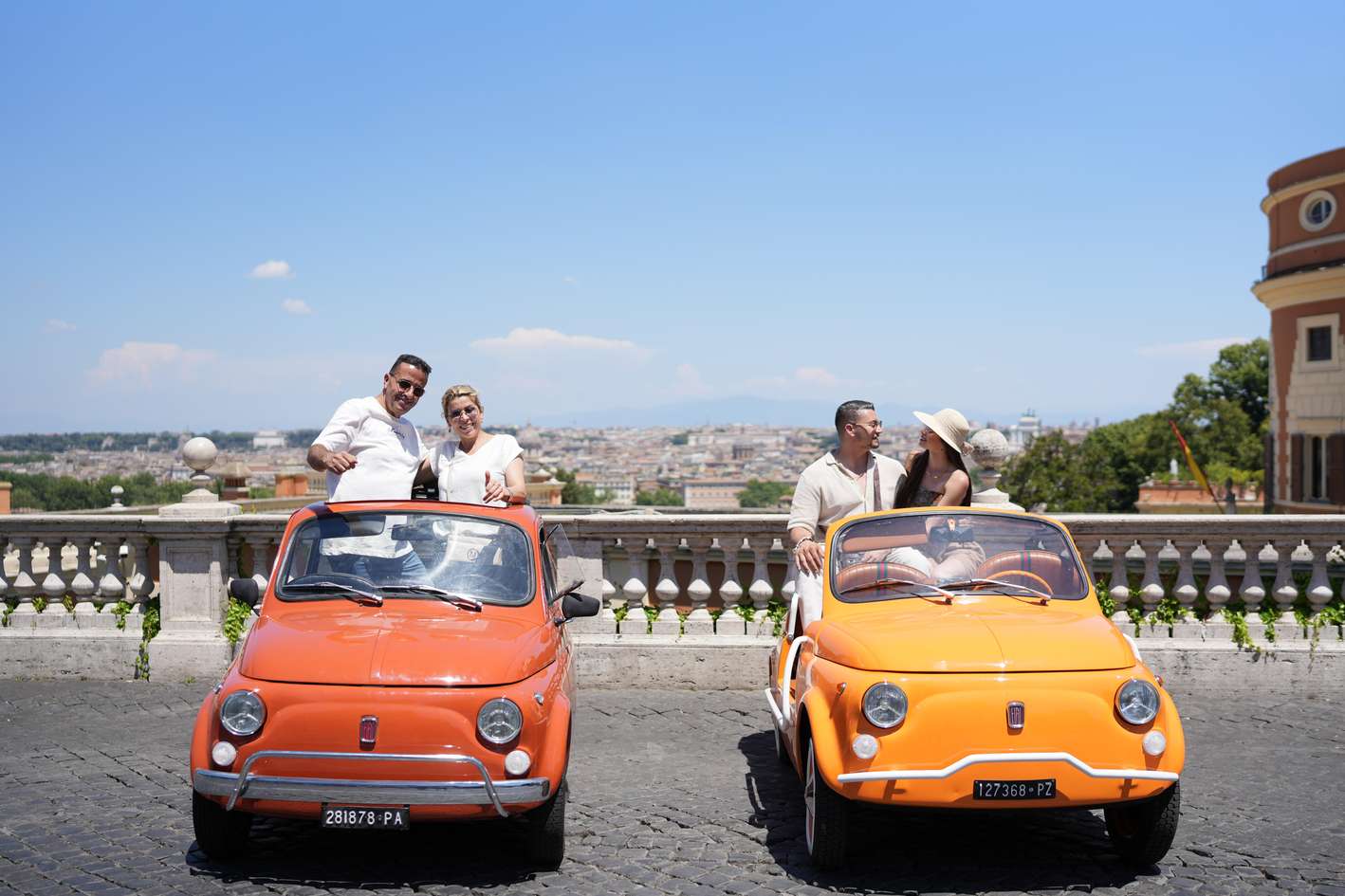
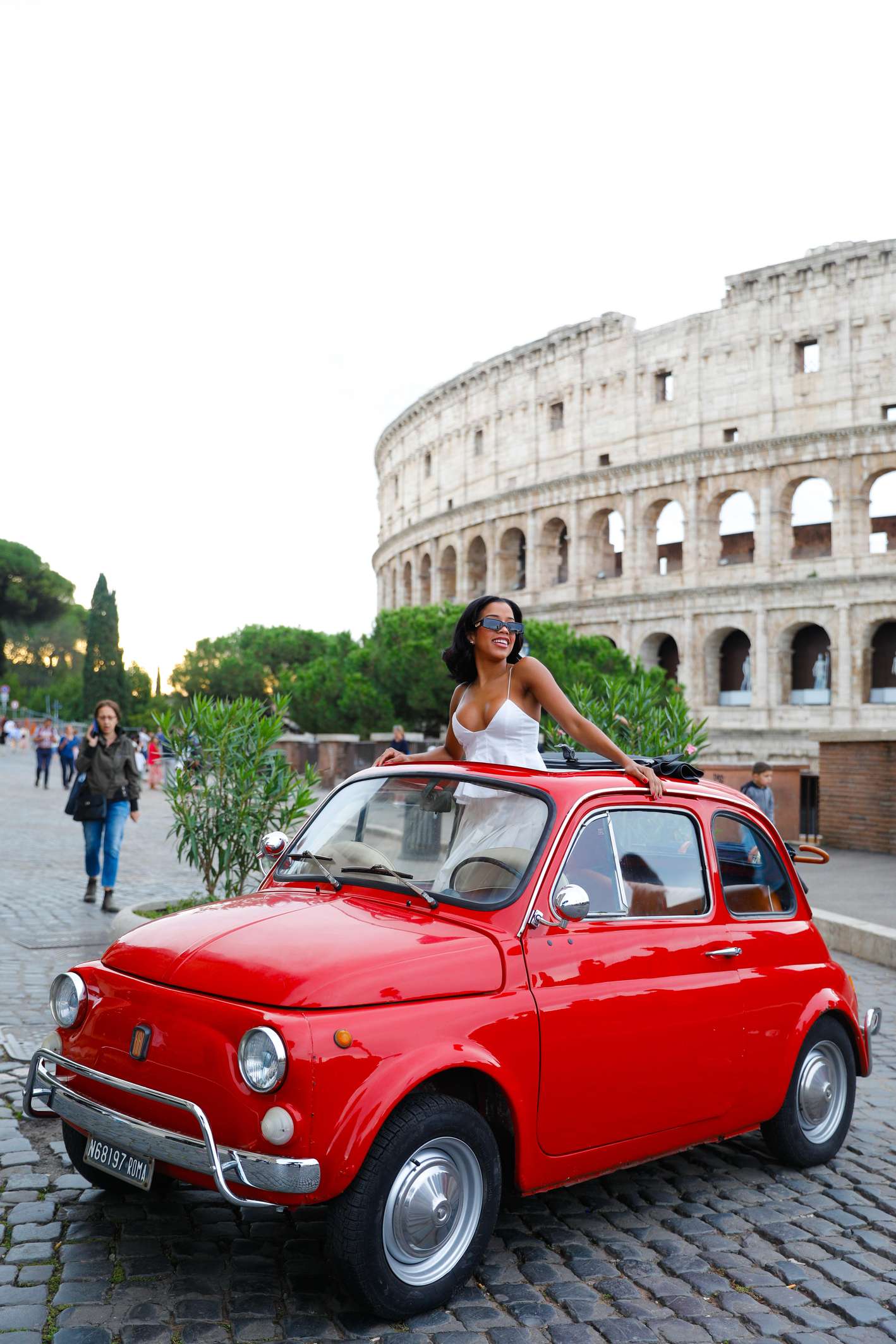
The Rome experiences on this site are guided rides with a driver at the wheel, and Rome's historic center adds restricted-traffic zones and heavy traffic on top. For self-driving, the tours here run from Florence, Syracuse and the Sorrento area instead.
How many people fit in the car, and what about children?
The Florence countryside tour takes up to three adults, or two adults with two children aged 3 to 12, though its rear seats have no safety belts fitted.
On the Syracuse tours children under 11 cannot join, and some operators do not permit child seats at all, so check the terms for the tour you choose.
More ways to plan your self drive vintage day in the Fiat 500
Your self drive vintage outing through the hills around Florence
Drive a restored Fiat 500 through the Tuscan countryside with a guide in radio contact, a ham and cheese tasting, and a glass of Chianti, and cancel up to 24 hours ahead for a full refund.